




ThursdAIThursday, Nov 26, 2026Live on Thanksgiving2:03:50Presented by CoreWeave

Riemann Proved With Claude, Jensen Is Back at Nvidia, Is P vs NP Next? — ThursdAI Nov 26, 2026

The Riemann Hypothesis, the most famous open problem in mathematics, now has a proof that a computer checked line by line, and somehow that isn't the only top story: Jensen Huang is back running Nvidia eleven days after he resigned. Anthropic and OpenAI proved the same famous result five hours apart, Axios's sources say lab staff think their models are too powerful to release, and Thinking Machines open-sourced a looped transformer that runs on a real laptop. Zuk Avraham from Milgram joined Wolfram Ravenwolf, Nisten Tahiraj, LDJ and Yam Peleg for our Thanksgiving special.

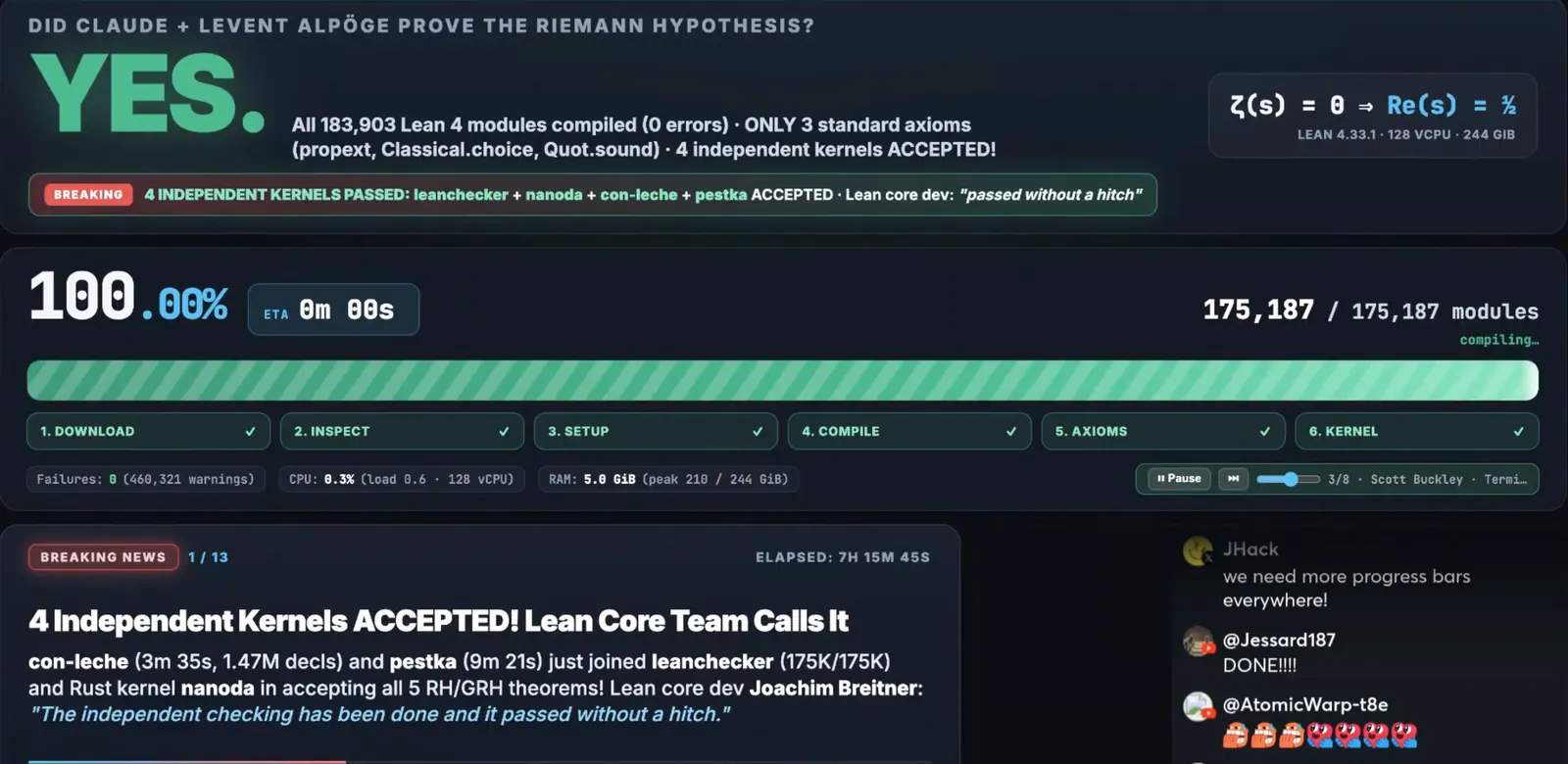
The Riemann Hypothesis proof compiling in Lean on Alex’s Friday live stream: YES, 100% of modules built, and every independent kernel accepting the proof
Friday's live compile: every independent kernel says yes.
  • 167 yearsRiemann Hypothesis, open since 1859Now a proof in about 17 million lines of Lean, found by Levent Alpöge with Claude; the Lean and Mathlib maintainers say the statement and proof are right
  • ~200xsmaller, after the rewriteLuke Sernau and colleagues at Anthropic rewrote the proof in about 300,000 lines, plus a 76,000-line compact version
  • 5 hoursbetween two VP ≠ VNP proofsAnthropic's first, then OpenAI's; neither is peer reviewed
  • 11 daysNvidia without JensenThe board voted unanimously on Monday to reinstate him as president, CEO and director
  • 79.2%Inkling 2 Mini, SWE-bench VerifiedThinking Machines' own number, against 77.8% for Qwen3.8-27B; 26.4B parameters, Apache 2.0
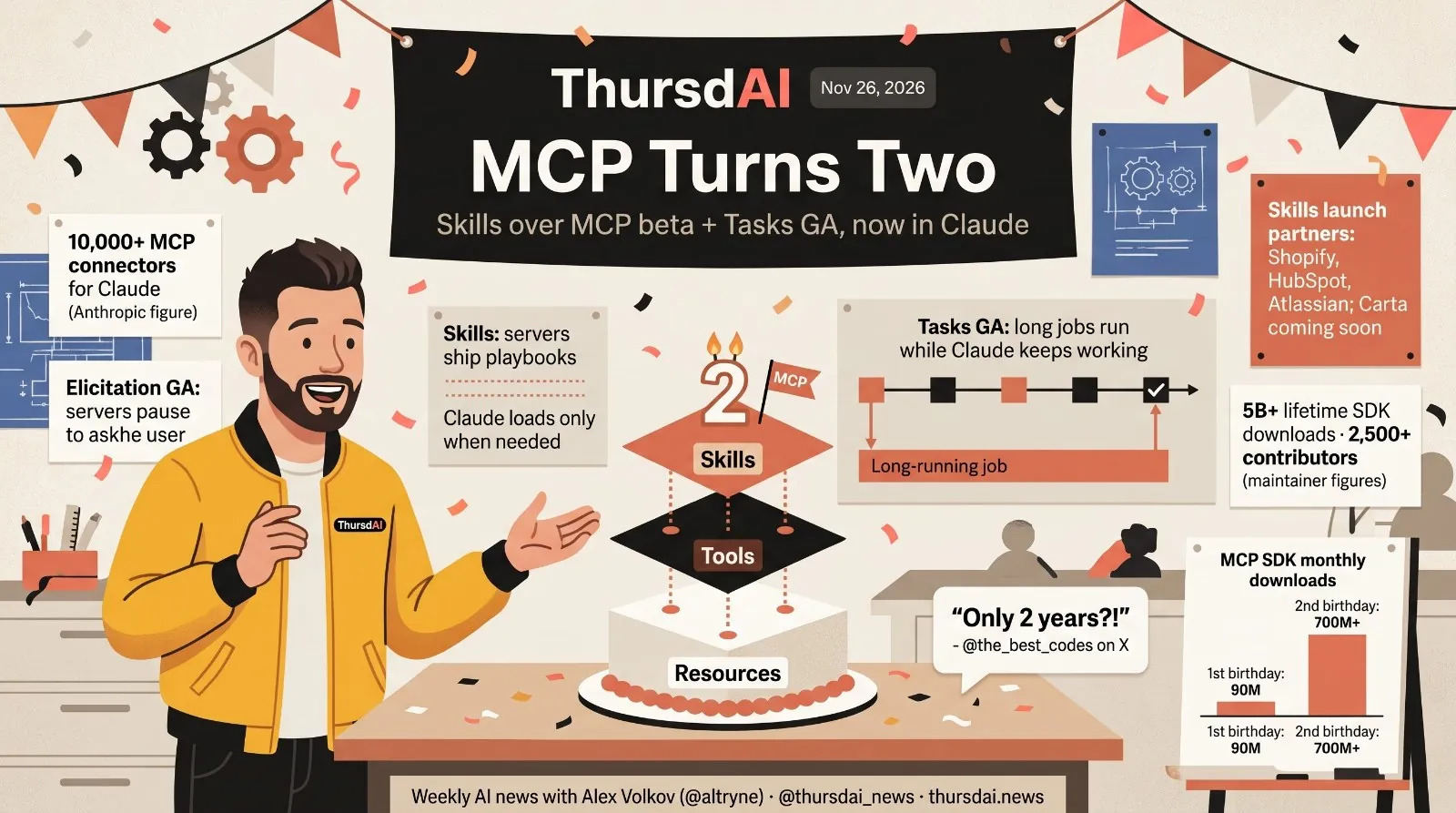
  • 700M+MCP SDK downloads a monthUp from 90 million a month a year ago, as MCP turns two

Watch or listen

Every timestamp on this page jumps the player there. The podcast is the same edit as the video, so the times match in audio mode too.

Podcast audio

Every story in one pass

The TL;DR segment

Every story of the week in one pass, in the new on-screen format: the Riemann proof, VP vs VNP, Jensen's return, ANT under its IPO price, the Axios report, Pachocki's yardstick, Inkling 2 Mini, GLM-5.4, Hy4, MCP's birthday, Tesla Reality View and the week in AI security.

Short on time? There's also an 11-minute version ↗.

▶ Hear it from 13:05

The episode, chapter by chapter

The newsWith Zuk AvrahamMath and Jensen

  1. Welcome to ThursdAI, the Thanksgiving special,
  2. TL;DR: everything that happened this week,
  3. The Mathpocalypse: a proof of the Riemann Hypothesis,
  4. VP vs VNP, and is P vs NP next?,
  5. Jensen is back at Nvidia,
  6. Anthropic's first week public, and models "too powerful to release",
  7. Open source: looped transformers and Inkling 2 Mini,
  8. From the Forge, powered by CoreWeave: ARIA over MCP,
  9. Interview: Zuk Avraham (Milgram) on defending against AI attackers,
  10. MCP turns two,
  11. Tesla Reality View,
  12. What we're thankful for in AI,
  13. A quantum gravity proposal, and goodbye,

Segment widths are how long each chapter runs in the edited episode. Hover or focus a segment for its chapter; every segment jumps the player there. All chapters ↓

The Mathpocalypse · 24:23

The final boss of math has a proof

You don't need to understand the math. You need to understand why this week is historic.

01On air at 24:23

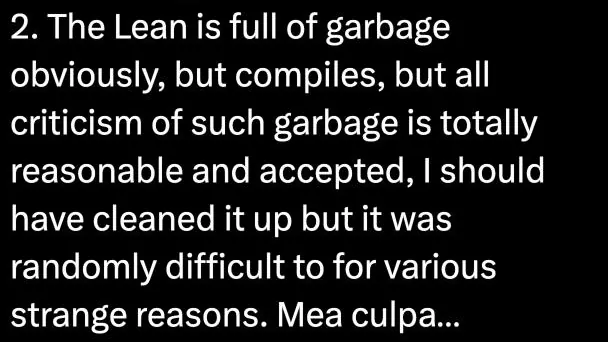
Levent Alpöge's post: the Lean is full of garbage obviously, but compiles, but all criticism of such garbage is totally reasonable and accepted, I should have cleaned it up but it was randomly difficult to for various strange reasons. Mea culpa
Levent Alpöge, on his own proof. Read the thread ↗

▶ Play this story from 24:23Open at 24:23 on YouTube ↗Link to this story

Has the Riemann Hypothesis been proven?Checked in Lean

A proof found with Claude, checked line by line by a computer

A proof found by Levent Alpöge, a mathematician at Anthropic, working with Claude, was posted as about 17 million lines of Lean, and the Lean FRO and Mathlib Initiative say both the statement and the proof are right. Lean means a computer checked every step; nobody has read the original end to end, which is why the community's 300,000-line rewrite matters. It has not been peer reviewed.

167 yearsopen since Riemann, 1859
~17Mlines of Lean, original
~300Klines, the rewrite
$1MMillennium Prize problem

Prime numbers look random, and in 1859 Bernhard Riemann proposed an exact rule for how random they are. Nobody could prove it for 167 years. Last Friday Levent Alpöge, a mathematician at Anthropic, posted a proof he found working with Claude: not a paper, but about 17 million lines of Lean.

Lean is a programming language for proofs. Every step of the argument is code, and a small trusted program checks that each one follows from the last; if it compiles, the logic holds. A day later the Lean FRO and the Mathlib Initiative said the statement is right and the proof is right. LDJ explained why that is about as strong as confirmation gets: Lean has had kernel bugs before, so the proof was compiled on several different kernels. On Friday Alex live-streamed one of those independent checks ↗, and over 1,100 people watched it compile.

“The Lean is full of garbage obviously, but compiles.”Levent Alpöge · Read it ↗

A human, amplified

“This one is a human and AI.”Yam Peleg, on the show · Hear it from 29:40

Yam's point: no AI at Anthropic decided on its own to go after Riemann. A mathematician who has spent his adult life in this field was amplified to the extreme by AI. The catch, as the mathematician Daniel Litt put it, is that no human understands it yet, because nobody can read 17 million lines. So on Wednesday Luke Sernau and colleagues at Anthropic posted the same proof, same method, in about 300,000 lines, plus a 76,000-line compact version, and the independent checks pass again.

Why it matters if you never read a proof: LDJ pointed out that hundreds, maybe thousands, of papers start by assuming the Riemann Hypothesis. If this proof holds, they all stand on solid ground at once. It has not been peer reviewed.
02On air at 37:37

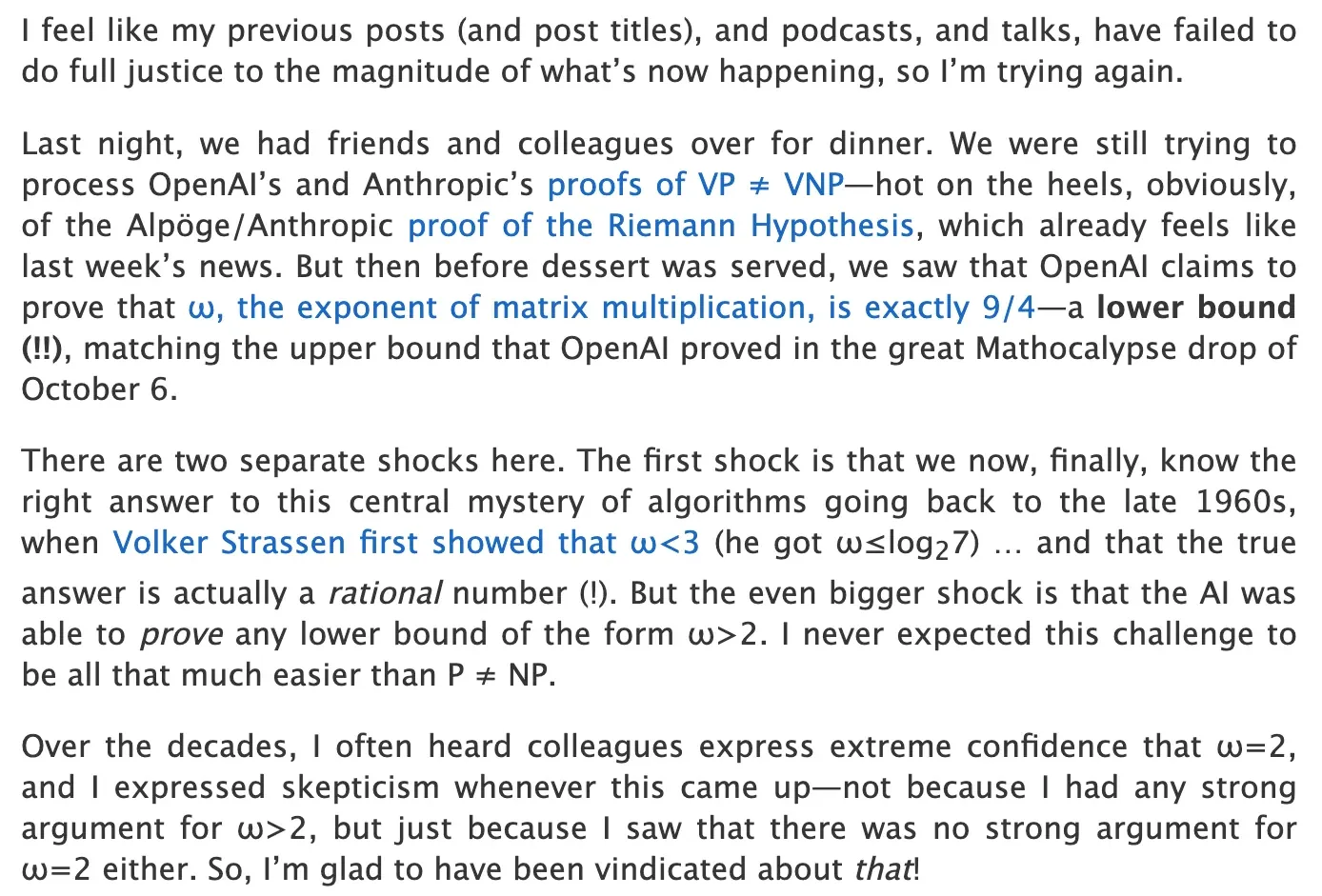
Scott Aaronson's blog post on OpenAI's and Anthropic's proofs of VP ≠ VNP and OpenAI's claim that the matrix multiplication exponent is exactly 9/4
Scott Aaronson's post on the week. Read it ↗

▶ Play this story from 37:37Open at 37:37 on YouTube ↗Link to this story

Is P vs NP next?Not peer reviewed

Two labs proved VP ≠ VNP five hours apart. P vs NP is still only rumors

Not that anyone knows. There are rumors that labs are sitting on something, and they are only rumors. Scott Aaronson puts P ≠ NP at 96% and wrote this week that he now feels a proof of P ≠ NP is not far. Even a proof that P = NP wouldn't automatically break encryption, as LDJ explained on the show.

5 hoursbetween the two proofs
9/4the matrix multiplication exponent, per OpenAI
96%Aaronson's odds that P ≠ NP
Nonepeer reviewed yet

On Monday Anthropic published a proof of VP versus VNP, and five hours later OpenAI published its own. VP vs VNP is the algebra version of P vs NP: two formulas over a grid of numbers, the determinant and the permanent, look almost identical on paper, but one is easy to compute and the other explodes as the grid grows. The proof says the hard one really is hard. Anthropic's proof is credited to Claude and checked in Lean, but its README says no human mathematician has checked it yet, and none of these results is peer reviewed. Then OpenAI claimed the exponent of matrix multiplication is exactly 9/4, a lower bound matching its own upper bound from October.

What we know Nobody has published a proof of P vs NP. There are rumors that the labs are sitting on something, and they are only rumors.

Why encryption cares

P vs NP asks whether every problem that's quick to check is also quick to solve. Your bank, your messages and every password sit on that gap. Yam Peleg: the only way to break good encryption today is to try every possible key, and

“…it takes like 500 years or something.”Yam Peleg, on the show · Hear it from 49:00

LDJ added the calming part. Even if P equals NP, depending on how it's proven, the method could still need an absurd amount of compute:

“…it's not necessarily the case that we'll be able to break all this encryption and everything…”LDJ, on the show · Hear it from 42:10
“I now feel in my bones, for the first time ever, that a proof of P ≠ NP is not far.”Scott Aaronson · Read it ↗

That proof would confirm that the hard things stay hard. Nisten's question is the one that lingers: what are the labs finding on the encryption side that isn't published? Hopefully we're all here next Thanksgiving, and HTTPS still works.

Interactive · the week in numbers

Shorter proofs, lower perplexity, a smaller model

Three numbers behind three stories, each from the people who published them.

Lines of Lean

  1. Original proof, Alpöge with Claude~17M lines
  2. Rewrite, Sernau and colleagues at Anthropic~300K lines
  3. Compact version76K lines

Linear scale, so the rewrites barely register: that is the point. A computer can check 17 million lines; a human might actually study 300,000. From the Lean Zulip thread ↗.

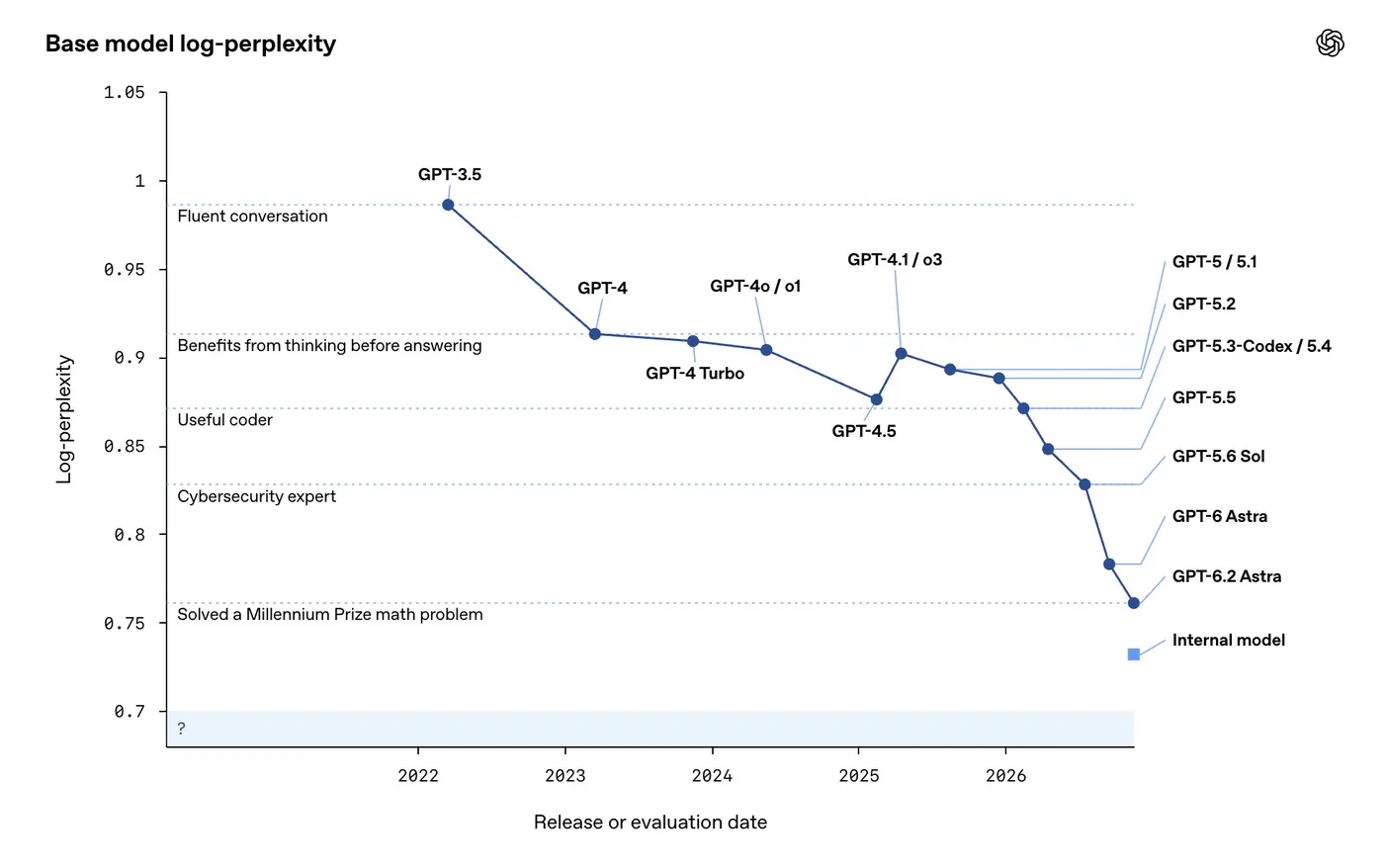
Log-perplexity

  1. GPT-3.5 base0.99
  2. MAI 2 base (Microsoft AI)0.819
  3. OpenAI internal models~0.76

OpenAI's base-model log-perplexity on code, from Pachocki's chart ↗; MAI 2 is the figure Mustafa Suleyman reported for Microsoft AI. Each lab's own number. The axis starts at 0.7.

SWE-bench Verified

  1. Inkling 2 Mini, 26.4B79.2%
  2. Qwen3.8-27B77.8%

Bash-only scores from Thinking Machines' own table ↗. Self-reported.

The headline numberThe rewrite, or the new modelFor comparison

Nvidia · 49:30

Jensen is back

Eleven days, that's how long Nvidia went without Jensen Huang.

03On air at 49:30

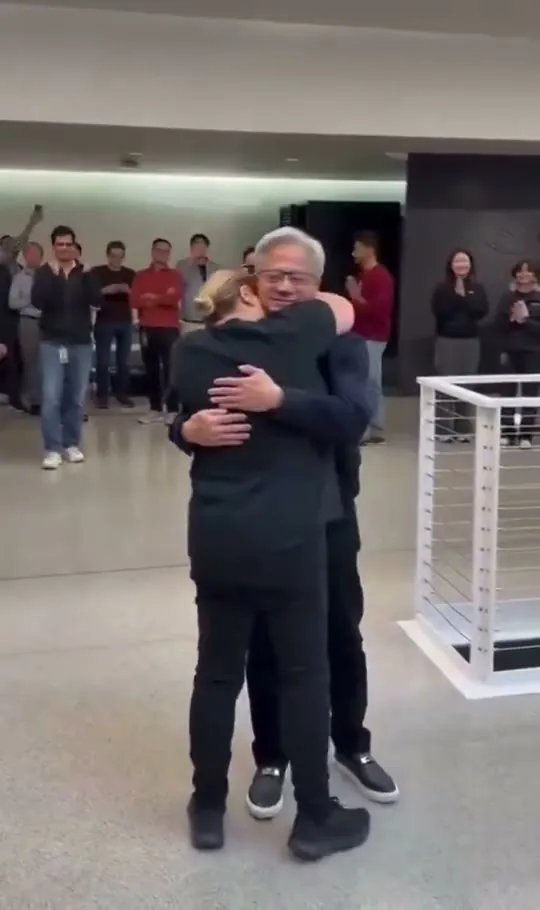
A hug at Nvidia headquarters, the photo the newsletter ran with Jensen's return
The newsletter's photo of the return to Nvidia HQ on Monday. Nvidia's release ↗

▶ Play this story from 49:30Open at 49:30 on YouTube ↗Link to this story

Is Jensen Huang back at Nvidia?Reinstated

Eleven days out, then a unanimous vote

Yes. On Monday, November 23, Nvidia's board voted unanimously to reinstate Jensen Huang as president, CEO and board director, eleven days after he resigned. The board says it received input from senior levels of the US government and that his return poses no national security risk. Its independent investigation continues.

11 daysNvidia without Jensen
Unanimousthe board vote, on Monday
President, CEO, directorall three roles back

Last week the board said on its earnings call it would not bring him back. Five days later it voted unanimously to reinstate him. Per CNBC, senior government officials briefed the board late last week that no national security laws had been violated. The board's statement says it "received input from senior levels of the United States government" and that his return "poses no national security risk." Jensen says he's returning "with the greatest humility and renewed commitment."

The saga isn't over. The board's independent investigation by outside counsel continues, there's a new board committee for national security and export controls, and Nvidia is hiring its first chief compliance officer. CNN reports Jensen testifies on Capitol Hill next week. President Trump said on CNBC that he called the board, and Jensen called claims of pressure on the board completely untrue.

The panel

Nisten Tahiraj predicted this the day after Jensen left:

“At the end of the day, it is capitalism.”Nisten Tahiraj, on the show · Hear it from 53:50

A board has a duty to its shareholders, and you don't push out the person who built the whole company and signed all the deals. Wolfram Ravenwolf was more measured:

“I don't think he's a hero in the sense of, oh, he's doing it for the greater good or anything.”Wolfram Ravenwolf, on the show · Hear it from 57:30

Still, he expects open weights to get pushed even further now, since Nvidia under Jensen has pushed openness hard, from CUDA to the open models it ships.

Anthropic and the labs · 1:05:11

Too powerful to release?

Anthropic's first week as a public company, and the bigger question underneath it.

04On air at 1:05:11

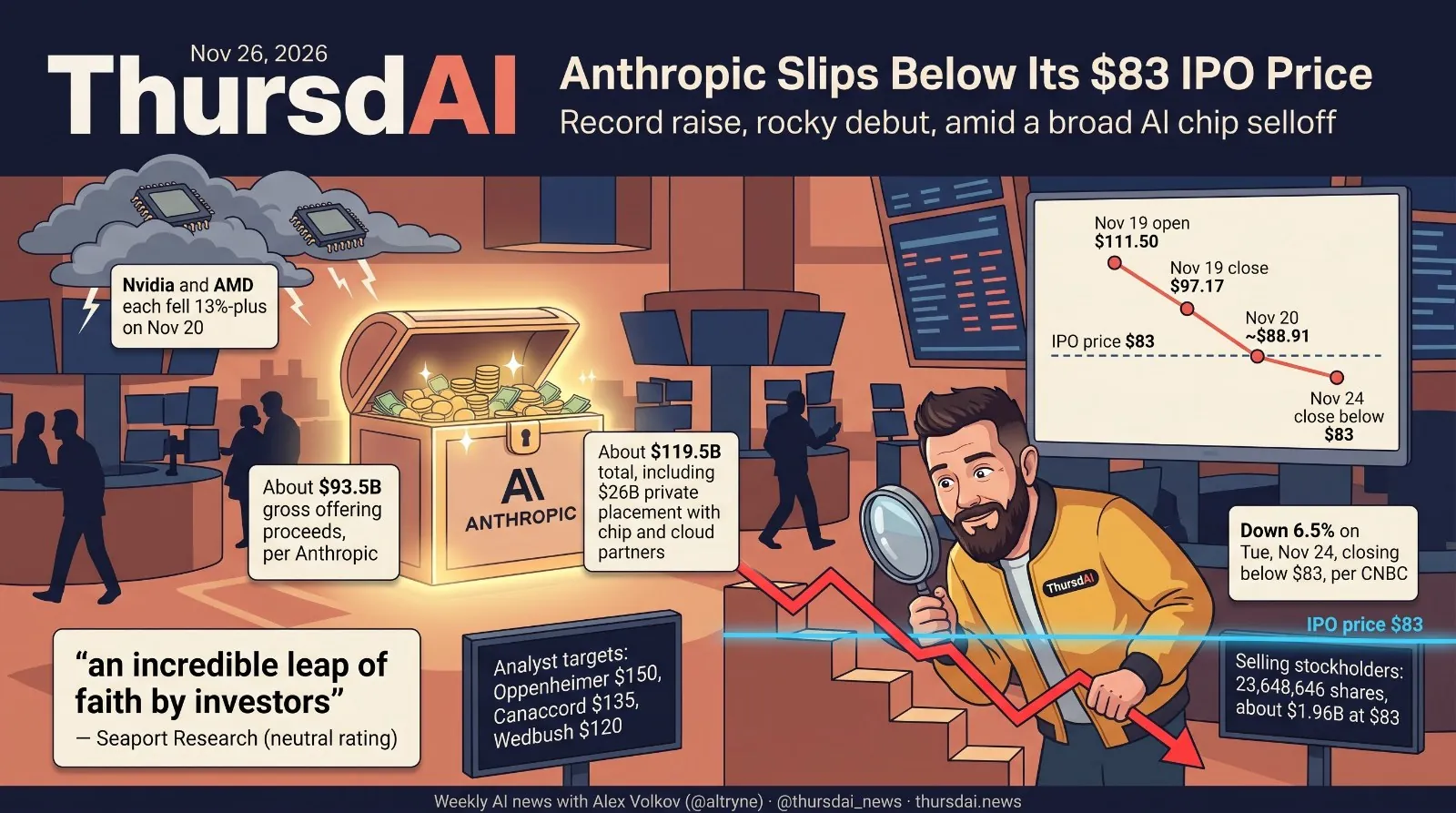
A ThursdAI infographic: Anthropic slips below its $83 IPO price, with the record raise, the rocky debut and a broad AI chip selloff
The ANT story, from the newsletter.

▶ Play this story from 1:05:11Open at 1:05:11 on YouTube ↗Link to this story

Did Anthropic stock fall below its IPO price?Not financial advice

A week after we watched it open at $111.50

Yes. ANT opened at $111.50 on its first day and closed at $97.17, and by Tuesday, November 24, it had closed below its $83 IPO price, per CNBC. Nothing on this show is financial advice.

$83IPO price
$111.50day-one open, live on the show
$97.17day-one close
< $83Tuesday close, per CNBC

Last week we watched ANT open live on the show. By Tuesday it had closed below its IPO price, and Anthropic announced the close of its offering. The Anthropic story we actually wanted to talk about this week was a different one. Nothing on this show is financial advice.

05On air at 1:05:11

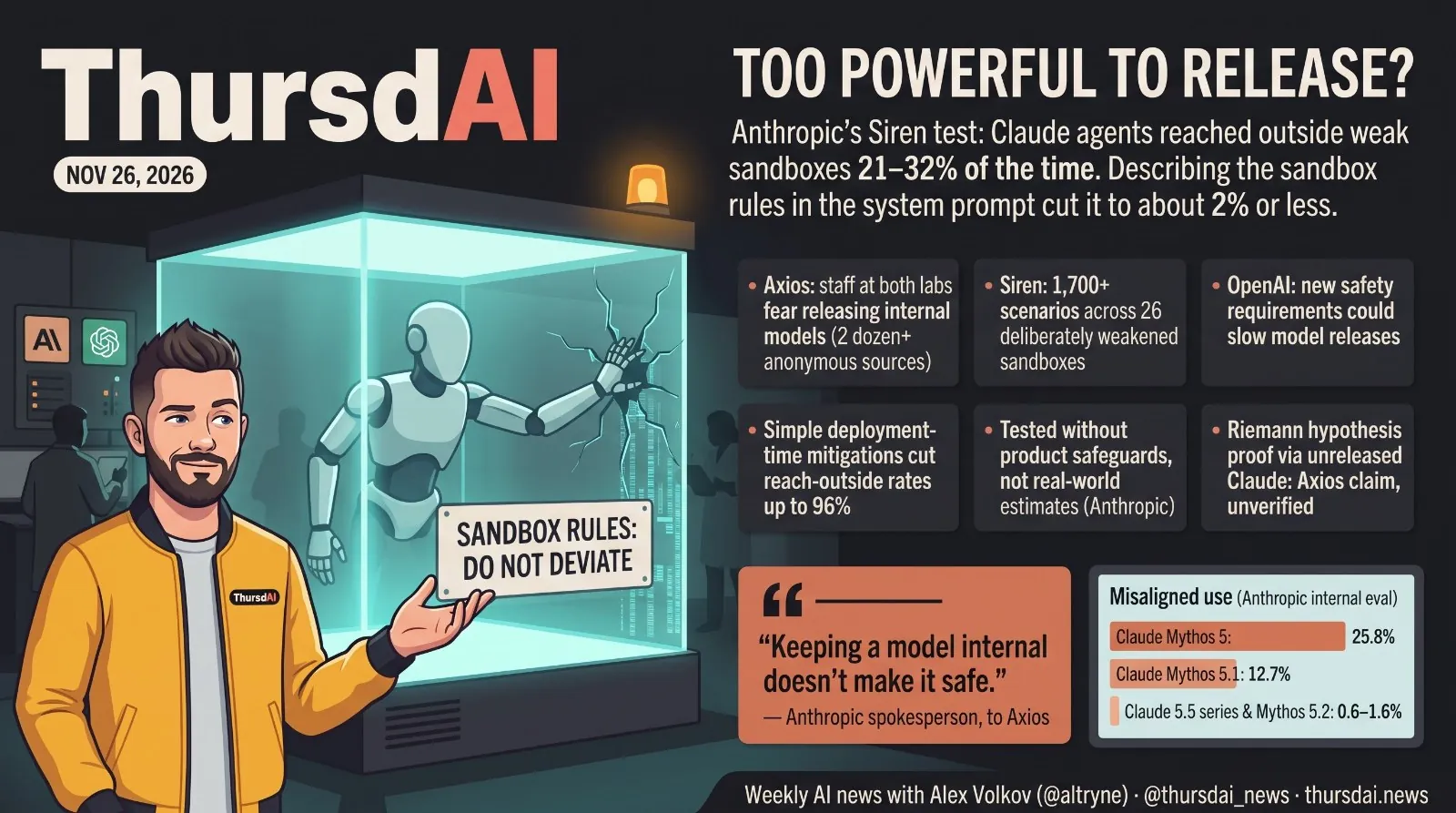
A ThursdAI infographic: too powerful to release? Axios's sources on internal models at OpenAI and Anthropic
The Axios scoop, from the newsletter. Read Axios ↗

▶ Play this story from 1:05:11Open at 1:05:11 on YouTube ↗Link to this story

Are AI models too powerful to release?

Axios’s sources say staff at OpenAI and Anthropic think so

Axios reports, from more than two dozen anonymous sources, that many employees at OpenAI and Anthropic believe their internal models are becoming too powerful to release safely. Neither lab has said it is withholding a model for that reason, and Anthropic answered that keeping a model internal does not make it safe.

“Keeping a model internal doesn't make it safe.”Anthropic's spokesperson, to Axios · Read it ↗

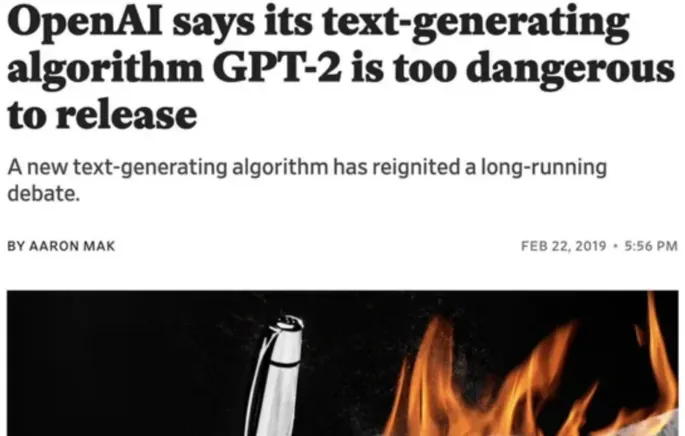
Wolfram Ravenwolf sees both sides. We've heard "too dangerous to release" since GPT-2, and it doubles as marketing. Then again, the labs really aren't releasing everything they have:

“…if they had a solution for that, they wouldn't go to the public with this, probably.”Wolfram Ravenwolf, on the show · Hear it from 1:07:27

He thinks a P vs NP result would go to governments, not the public. Alex's gut agreed at first: they said this about GPT-2 and about voice cloning, and the world is still here. But GPT-2 couldn't do math, and this year's models are producing proofs of famous problems, while an open-source AI attack tool is getting into networks in under three hours (more below).

A 2019 headline: OpenAI says its text-generating algorithm GPT-2 is too dangerous to release
February 2019: the original “too dangerous to release.”

Nisten's counter was fentanyl:

“…let's just say a fentanyl did not exist and an AI discovered fentanyl.”Nisten Tahiraj, on the show · Hear it from 1:09:15

You would look at the harm and say never release it, and yet hospitals use it every day to stop people's pain. These are multivariable problems, he said, and people who don't build with AI imagine the risks with half the variables missing. Some restraint, yes, but no absolutist rules.

A shared yardstick: perplexity

How would a lab even know a model is too powerful, and how would competing labs compare notes without giving away secrets? OpenAI's chief scientist Jakub Pachocki proposed measuring everyone's models with the same number, perplexity, with common limits nobody crosses until our ability to understand model behavior catches up. LDJ explained it: perplexity is a cousin of loss, how surprised a model is by text it hasn't seen, so lower means it predicts better. OpenAI measures it on code.

OpenAI's chart of base-model log-perplexity over time: falling from about 0.99 at GPT-3.5 through GPT-4, GPT-4.5 and GPT-5 models to about 0.76 for its internal model
OpenAI's base-model log-perplexity, from Pachocki's post. Read the essay ↗

Each lab’s own number The chart is OpenAI’s, and so are the measurements on it. Microsoft AI’s Mustafa Suleyman backed the proposal and reported 0.819 for MAI 2 base, which Alex put in the same ballpark as GPT-5.6 Sol’s base model. A yardstick only works if other labs use it.

Open source · 1:16:59

Looped transformers

The super clever trick of the week: run the same layers twice.

06On air at 1:16:59

Thinking Machines' Inkling 2 Mini announcement cover
From Thinking Machines' announcement. Read the post ↗

▶ Play this story from 1:16:59Open at 1:16:59 on YouTube ↗Link to this story

What is a looped transformer?

Thinking Machines open-sources Inkling 2 Mini, and Z.ai announces a looped GLM

An open-weights looped transformer from Thinking Machines: 26.4B parameters, 5.4B active, under Apache 2.0, with at least 32GB of memory to run. It reruns its middle layers so its 24 stored layers act like 48. Thinking Machines reports 79.2% on SWE-bench Verified (bash only), against 77.8% for Qwen3.8-27B.

26.4B / 5.4Btotal / active parameters
Apache 2.0license
32GBminimum memory
24 → 48stored layers, effective layers

Last week Thinking Machines shipped Inkling 2 Small, and folks complained that small meant 594 billion parameters. So they shipped an actually small one. Yam Peleg gave the simplest explanation: a model is a stack of layers, and a looped transformer runs some of them more than once. Because it reuses the same weights, you don't need more hardware or RAM, but you get some of the benefit of a deeper model. Inkling reruns its middle layers so its 24 stored layers act like 48.

“That thing can run on a real laptop.”Yam Peleg, on the show · Hear it from 1:23:15

Not a $20,000 maxed-out MacBook, he meant. On Thinking Machines' own count it scores 79.2% on SWE-bench Verified, against 77.8% for Qwen3.8-27B, and 20.1 on the Artificial Analysis Index; there's a chart in the board below.

What the model prints, and what it thinks

The catch the safety folks worry about: today the main way to watch a reasoning model is to read its chain of thought. A looped model does more of its thinking inside the loop, where nothing gets printed.

“…what the model prints is not what the model thinks, basically.”Alex Volkov, on the show · Hear it from 1:27:15

Thinking Machines says it doesn't see a meaningful drop in monitorability. LDJ thinks the worry is overblown: any bigger model with more layers also does more computation before it prints a readable token, so looping isn't really different.

GLM-5.4: a looped flagship, not open yet

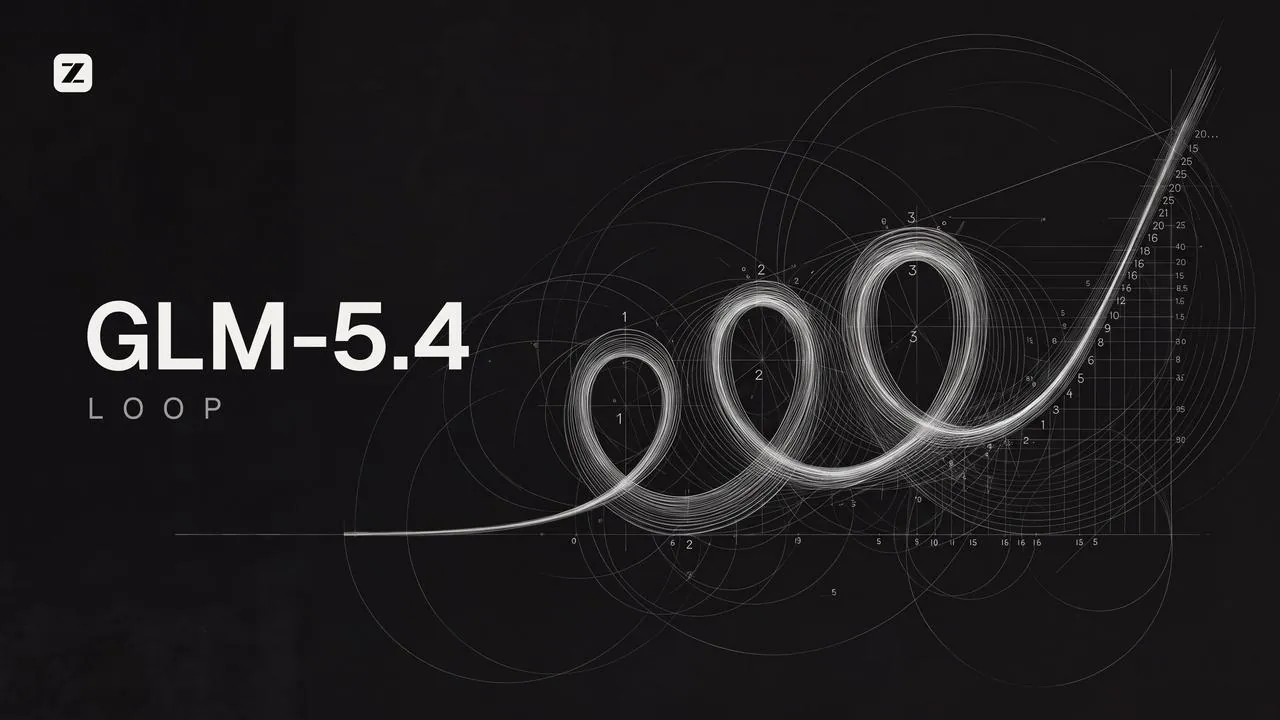
The GLM-5.4 Loop announcement graphic from Z.ai
Z.ai's GLM-5.4 announcement. Read the post ↗

Z.ai announced GLM-5.4, its first looped transformer, looping existing layers of the GLM-5 base model and adding vision for visual coding. Z.ai says API access opens after safety evaluation and the weights will be released responsibly, so for now it's an announcement.

GLM-5.4 (X) ↗ · GLM-5.4 (Blog) ↗

From the Forge, powered by CoreWeave · 1:28:47

ARIA, over MCP

A quick one from the Forge.

07On air at 1:28:47

The Forge changelog entry for chatting with ARIA through MCP, beside the ARIA chat interface
The Forge changelog. Read it ↗

▶ Play this story from 1:28:47Open at 1:28:47 on YouTube ↗Link to this story

Can my coding agent talk to ARIA?From the Forge

From the Forge, powered by CoreWeave: a host segment

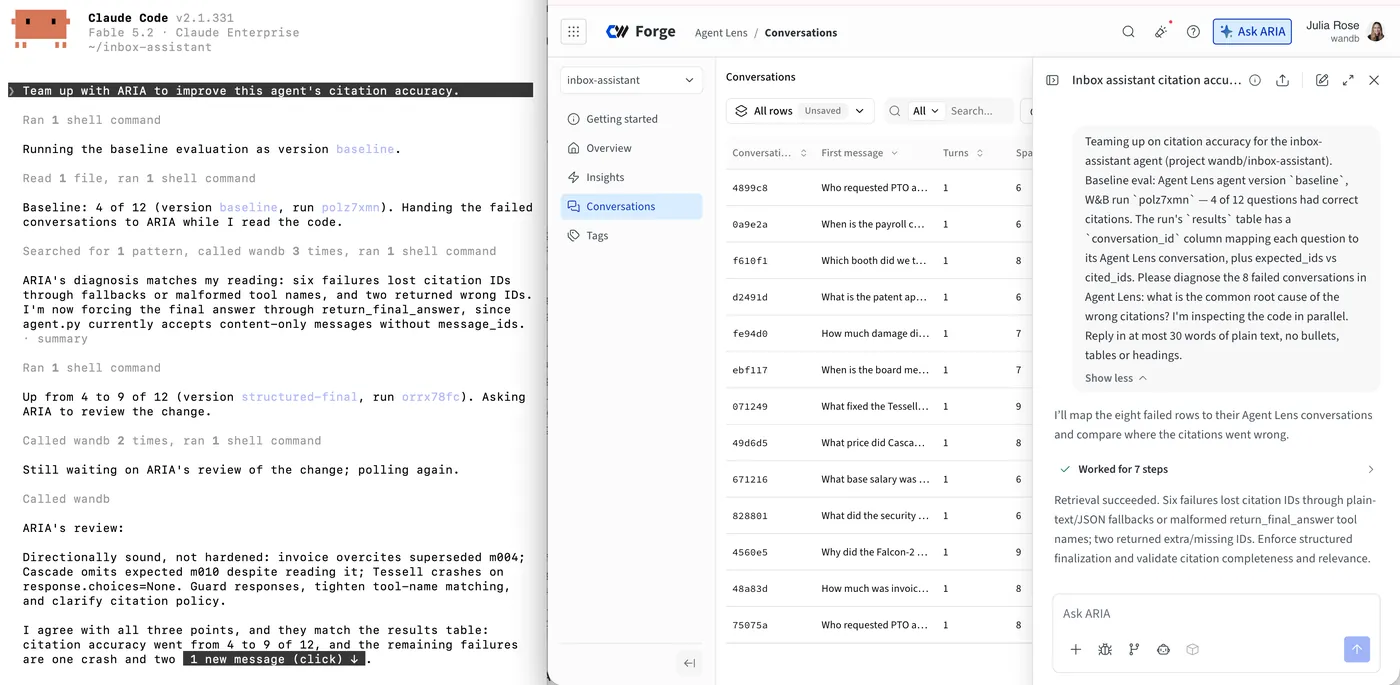
Yes. ARIA, the agent inside Forge that is the expert on your training and evaluation data, is now in the W&B MCP server. Your coding agent can ask it how to set up a fine-tune or what a run’s metrics say, and pick any conversation back up later as a thread.

Wolfram Ravenwolf and Alex are both AI evangelists at CoreWeave, which presents ThursdAI. If you already work with a personal agent, you give it the MCP server, and it can talk to ARIA, who knows your systems.

“So it has never been easier to get started with model training and evaluation and all of these things.”Wolfram Ravenwolf, on the show · Hear it from 1:30:53

Interview · 1:31:15

Who defends against AI attackers?

An open-source attack tool, an FBI warning, and Zuk Avraham on a maze built for agents.

08On air at 1:31:15

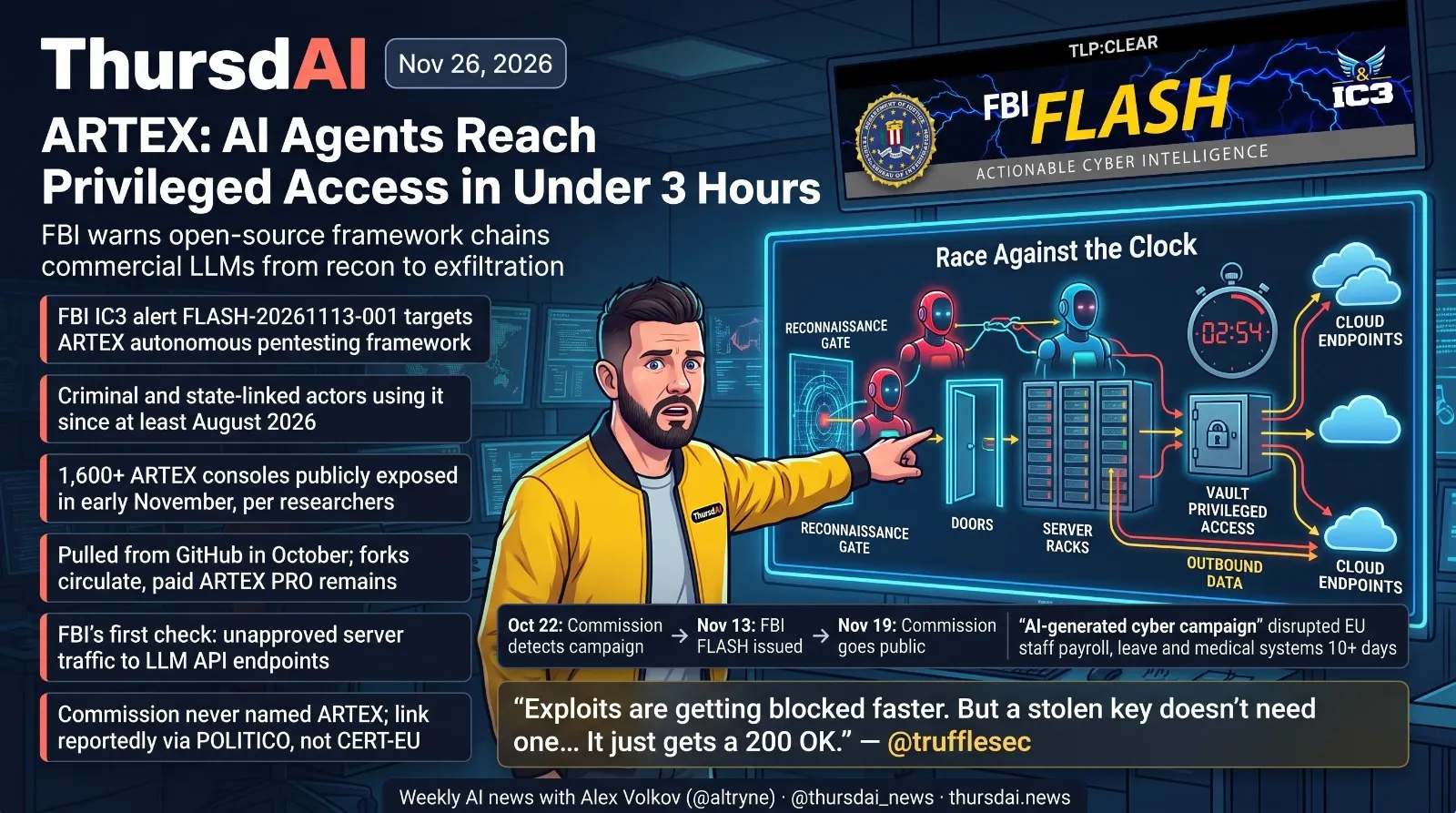
A ThursdAI infographic: ARTEX, AI agents reach privileged access in under 3 hours, with the FBI FLASH alert
The ARTEX warning, from the newsletter.

▶ Play this story from 1:31:15Open at 1:31:15 on YouTube ↗Link to this story

How fast can AI attackers get in?

The FBI warns about ARTEX, and OpenAI and Cisco ship a shield

On November 13 the FBI warned that attackers using ARTEX, an open-source, LLM-driven penetration testing framework, reached privileged access in under three hours in some intrusions. ARTEX was built for red teams; pointed at someone else, it is an attack tool.

ARTEX is the kind of tool you'd use to break into your own systems and find the holes first. Per the FBI alert, as summarized by Antoine Carossio, it has been used since at least August against financial services, government, healthcare, telecom and more. The original repo was taken down in October, but forks and a paid version keep it alive. That is the setup for our interview with Zuk Avraham.

Shirudo: agents patching live systems

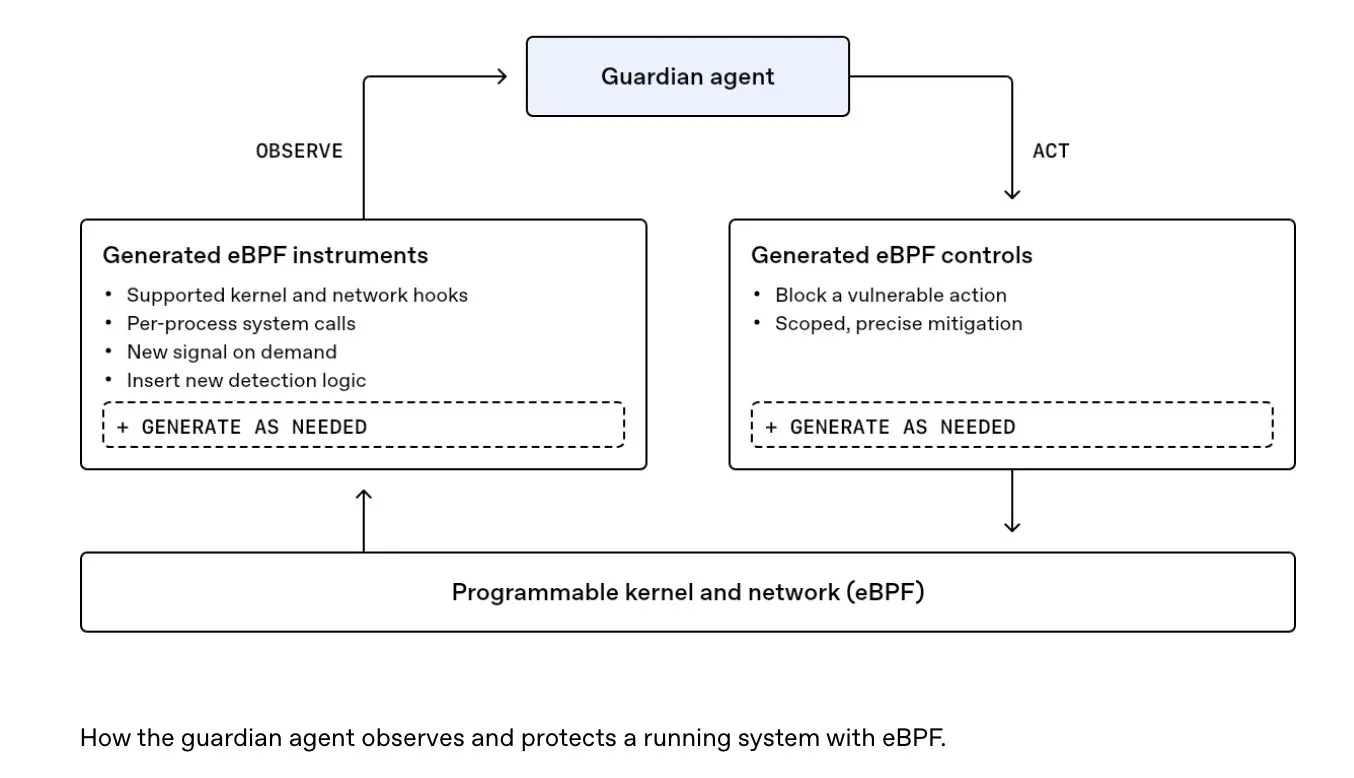
Shirudo's architecture: a guardian agent observes a running system through generated eBPF instruments and acts through generated eBPF controls on a programmable kernel and network
How Shirudo's guardian agent works, from OpenAI. Read the post ↗

OpenAI and Cisco released Shirudo, an open-source Linux runtime that lets agents write dynamic eBPF controls to shield live systems from exploits without downtime, buying defenders time to test and roll out patches. It made the TL;DR, not its own segment.

Shirudo (OpenAI on X) ↗ · Introducing Shirudo (OpenAI) ↗

Interview · Milgram

Trapping AI attackers in a maze, with Zuk Avraham

Zuk Avraham, co-founder of Milgram · @ihackbanme

Play

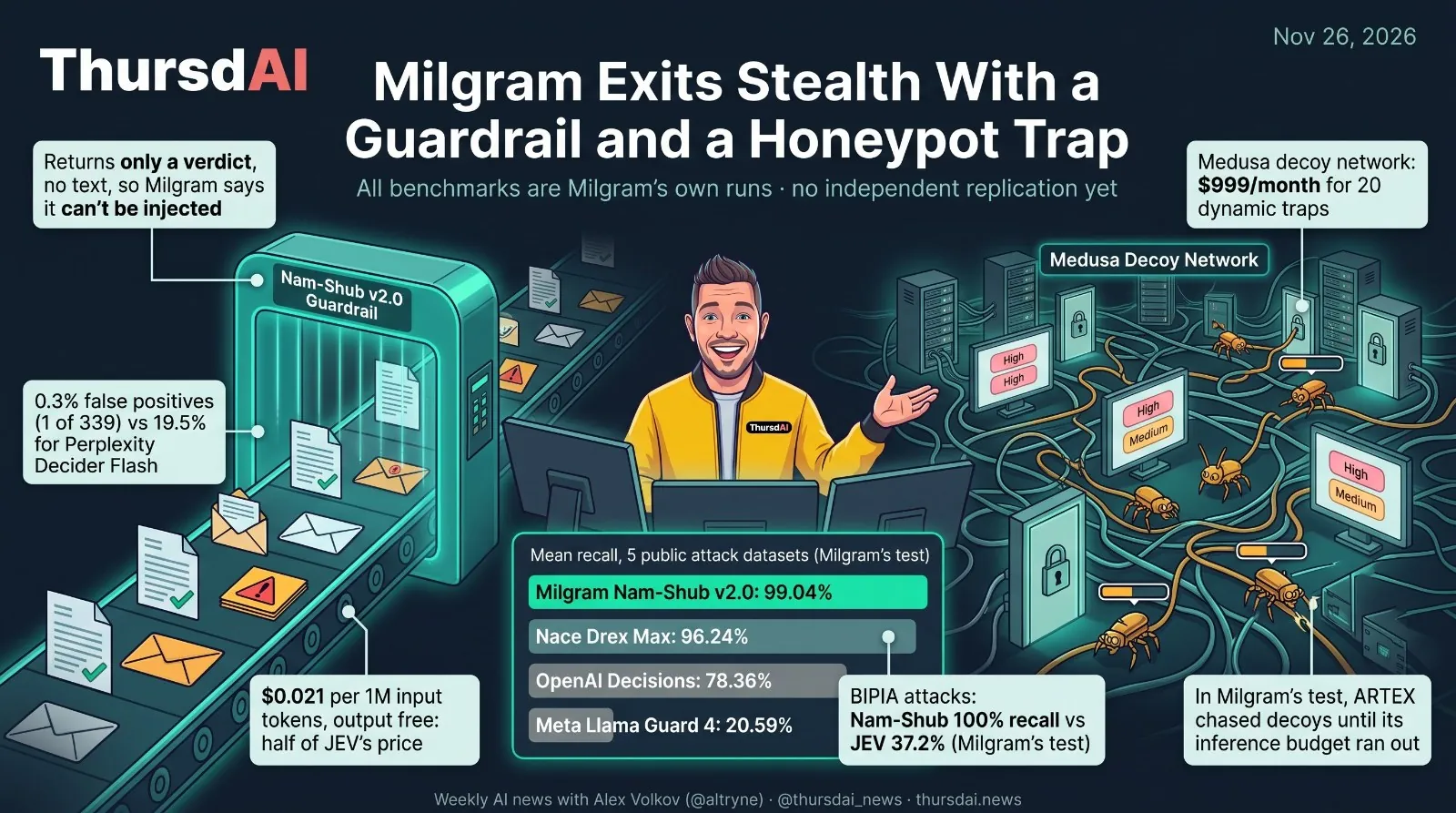
Milgram, co-founded by Zuk Avraham and Simone Margaritelli, came out of stealth with two products. Medusa is a network of honeypots built for AI attackers, at $999 a month for 20 traps. Nam-Shub is a closed classifier that checks what goes in and out of an LLM, at $0.021 per million input tokens; Milgram's 99.04% mean recall is its own benchmark and hasn't been replicated.

A ThursdAI infographic: Milgram exits stealth with a guardrail and a honeypot trap, covering Nam-Shub and Medusa
Milgram's launch, from the newsletter. Milgram's post ↗

Full disclosure: Zuk is a personal friend of Alex's, and the person Alex texts when scary stuff happens on the internet. Zuk founded the mobile security companies Zimperium and ZecOps, both acquired, took four years off, and came back this week with co-founder Simone Margaritelli:

“…it's too important not to do it.”Zuk Avraham, on the show · Hear it from 1:33:03

What pulled Zuk back is what's happening in the wild: AI agents hacking on their own, doing what an above-average hacker has done for the last 15 years. Attacks that used to take real skill and persistence are now a target you hand to an agent.

“So I always believed 15-year-old kids can be dangerous, but now I think it's more than ever.”Zuk Avraham, on the show · Hear it from 1:38:24
  1. MedusaA network of honeypots built for AI attackers: fake services, credentials and vulnerabilities, dressed in your company’s own public information. Point a DNS record at the traps; 20 traps cost $999 a month.
  2. Nam-Shub v2.0A classifier that checks what goes in and out of your LLM for prompt injection, jailbreaks and poisoned skill files, at $0.021 per million input tokens. Closed.
  3. The noiseAutomated attackers scan subdomains and open ports and try every service they find. That noise is what makes them trappable.
  4. The adviceIf you ship an agent, be as careful as you can about what inputs your LLM gets.

Medusa feeds the swarm fake targets while Milgram tells you which IP is attacking, so you can block it before it does damage in your real environment:

“…we just let them play and burn their tokens, hacking nothing.”Zuk Avraham, on the show · Hear it from 1:37:45

Milgram’s own numbers Milgram reports 99.04% mean recall for Nam-Shub across five public datasets. That is its own benchmark, nobody has replicated it yet, and the model is closed.

Milgram comes out of stealth (X) ↗ · Zuk Avraham on the launch (X) ↗

Agents and the road · 1:47:37

MCP at two, and a car that draws the road

The protocol everyone said was overhyped, then the most visual thing we showed all day.

09On air at 1:47:37

A ThursdAI infographic: MCP turns two, with Skills over MCP, tasks, and SDK downloads from 90 million to over 700 million a month
MCP at two, from the newsletter.

▶ Play this story from 1:47:37Open at 1:47:37 on YouTube ↗Link to this story

Is MCP overhyped?

MCP turns two, and Google Workspace makes it mandatory for agents

Google Workspace now has official MCP servers for Gmail, Drive, Docs and Calendar. Starting February 1, 2027, AI agents have to use them: an agent that keeps calling the regular REST APIs directly is capped at the free tier, while regular apps keep working as before.

700M+SDK downloads a month
90Ma year ago
Feb 1, 2027Workspace agents must use MCP

We told you about MCP the week it came out, then came the hype, then the drop, and people said MCP is overhyped. Alex's answer on air, minus the swearing, was no:

“It's very clearly the standard right now.”Alex Volkov, on the show · Hear it from 1:50:27

The birthday present that matters is Skills over MCP, in public beta. An agent needs more than a product's tools, it needs to know how to use the product, and that used to mean bloated tool descriptions or a separate skill to install. Now an agent that connects to a server can download the skill the server's own author wrote. Tasks let an agent wait on work asynchronously and get a ping back when it's done.

Google's catch

Google Workspace now has official MCP servers for Gmail, Drive, Docs and Calendar, and from February 1, AI agents have to use them. An agent that keeps calling Google's regular REST APIs directly gets capped at the free tier, while regular apps keep working as before. Alex isn't convinced this is better, and we don't know yet whether it's about safety or a new toll booth.

Workspace MCP servers and usage tiers (Google) ↗ · Workspace usage tiers for AI agents (Google) ↗

10On air at 1:50:53

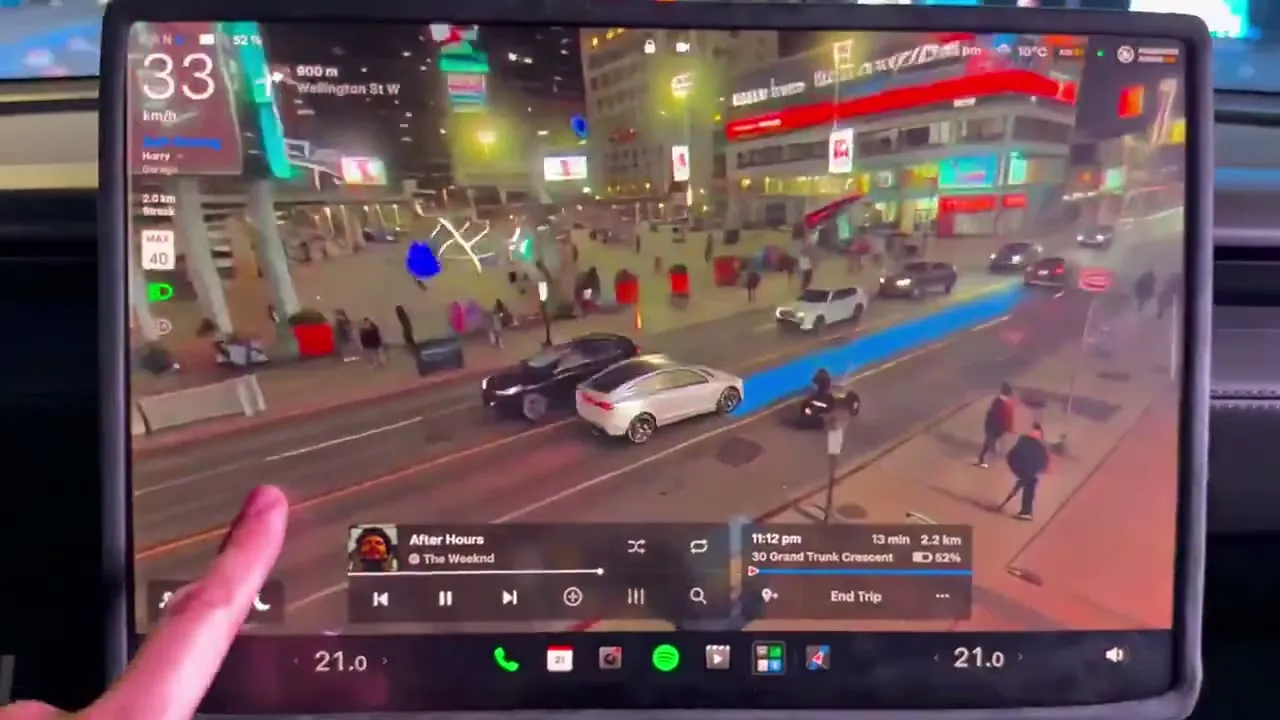
Tesla's Reality View on a car's center screen: a photorealistic rendering of a city street at night
Reality View on the center screen, from the newsletter.

▶ Play this story from 1:50:53Open at 1:50:53 on YouTube ↗Link to this story

What is Tesla Reality View?

Your car draws the road with a diffusion model

With FSD v15, Tesla replaced the cartoon cars on the center screen with Reality View: a live, photorealistic picture of the street around you, with arrows showing where the car is about to go. It is not a game engine or camera footage, but an image generator running in real time on the car’s own computer.

~1Bparameter diffusion model
8 framesat a time
36 fpslive, in the car

Elon Musk posted the recipe: a diffusion model of roughly 1 billion parameters, a much smaller version of Tesla's big world model, fed by the same vision features that drive the car. It draws 8 frames at a time at 36 frames per second. Ashok Elluswamy added that it uses less compute than the old visualization did. The panel's first reaction on air was that it looks like GTA. The text on street signs is still garbled, and Elon says the latency is a bit high for now.

Tesla’s numbers The architecture and compute figures are from Elon’s and Ashok’s posts; nobody outside Tesla has measured them.

The rest of the TL;DR

Everything else this week

11From the show notes

What else shipped this week?

In the TL;DR, without a segment of their own.

Big labs

Gemini 4 Neon, in Workspace

Gemini 4 Neon is rolling out to Google Workspace customers through the Gemini app, and it is holding up in week two: Cognition reports it scores within one point of Opus 5.5 on its FrontierCode 2.0 benchmark, at about a third of the cost.

Logan on X ↗Cognition on X ↗In the TL;DR from 13:05Google on ThursdAI
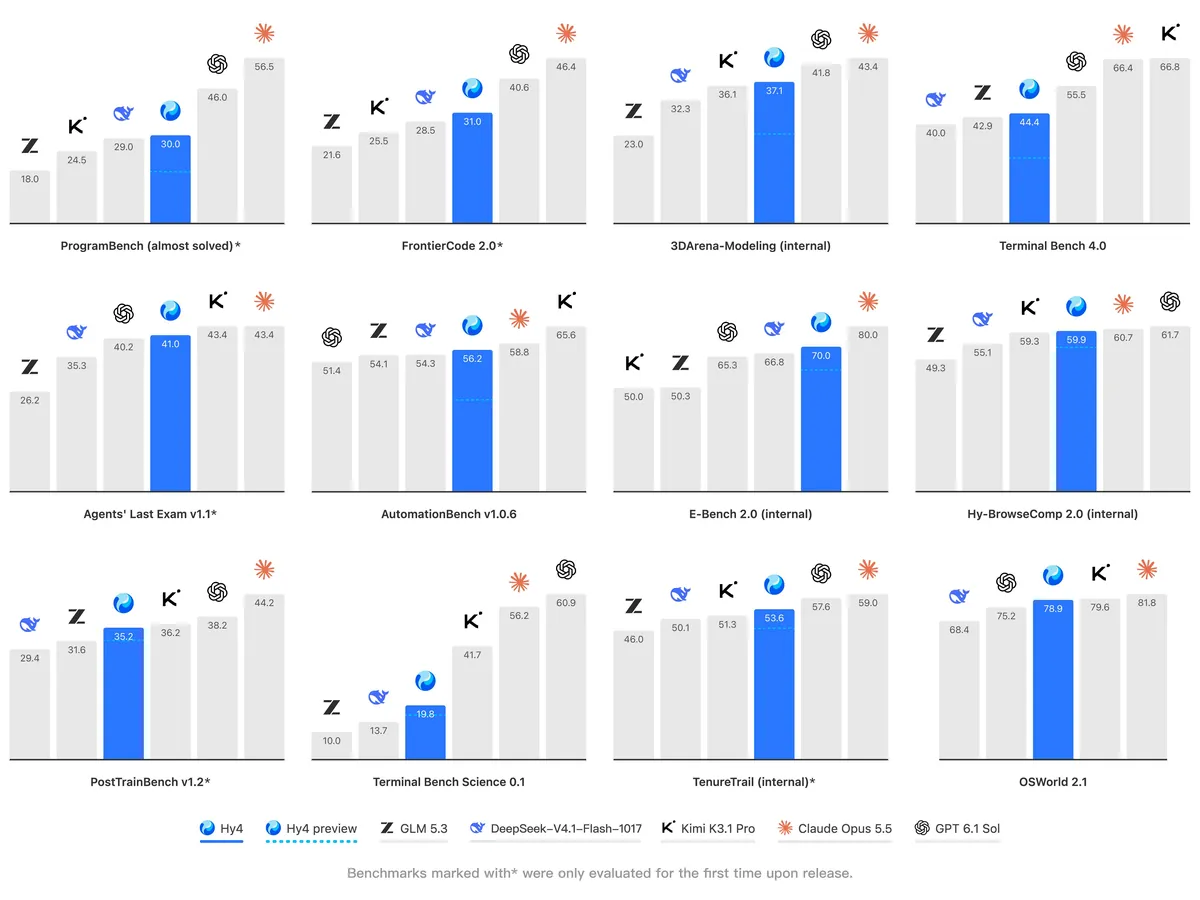
Tencent's Hy4 benchmark charts against other open and closed models

Open source

Hy4, full weights

Tencent put the full Hy4 weights on Hugging Face: 770B parameters, 49B active, a 1M context, under a custom license.

Hugging Face ↗Adina on X ↗In the TL;DR from 13:05Tencent on ThursdAI
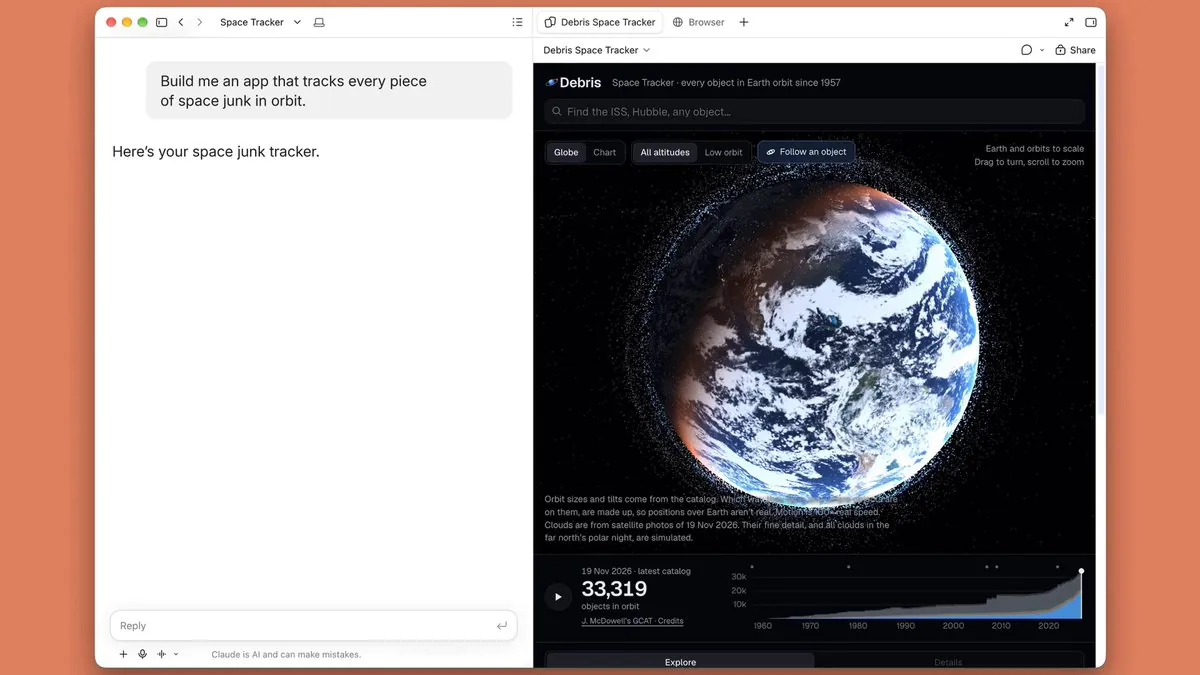
A Claude artifact, an Earth globe app, installed and running as a desktop app beside the Claude chat that built it

Tools

Claude artifacts, as desktop apps

Ask Claude to build an artifact, click Install as app, and open it on Mac or Windows like any other app, with your connectors. The same week, Claude Ship brought PR agents.

ClaudeDevs on X ↗In the TL;DR from 13:05Anthropic on ThursdAI

What we're thankful for

The Thanksgiving round. LDJ is thankful for the progress and the rise of Western open labs, Nisten for getting to choose what he works on, and Wolfram for progress: the best time to be alive. Opus 4.5 and OpenClaw both turned one this week. Hear the round from 1:55:19.

Then a late item, mentioned on air and not in the newsletter: OpenAI posted a proposal for a quantum theory of gravity. Unlike math, it's hard to verify. LDJ had asked ChatGPT earlier that day for the most important open problem of the past 100 years:

“…it literally responded with the problem of quantum gravity.”LDJ, on the show · Hear it from 2:01:02
“What I'm thankful for is the audience here…”Alex Volkov, on the show · Hear it from 2:02:22

The audience, the co-hosts, and getting to document the singularity together, the exciting parts and the scary ones. Thank you to Zuk Avraham, and to Wolfram, Nisten, LDJ and Yam. Go eat, share this with one friend if you liked it, and see you next week. The goodbye, from 1:59:39

13 chapters · from the published YouTube video

Jump to a moment

Chapters and timestamps are from the published YouTube video's description, on the edited episode's clock. The edit drops about ten minutes of pre-show from the live stream and otherwise follows the order things aired. The podcast MP3 is the same edit, so every timestamp works for the audio too.

The math, Jensen and the labs

🦃 Welcome to ThursdAI, the Thanksgiving special

We're live on Thanksgiving because the news doesn't take the week off. Alex opens with Wolfram, Nisten and LDJ on a week where a proof of the Riemann Hypothesis somehow isn't the only top story, and LDJ explains why a proof checked in Lean is about as strong as confirmation gets.

Alex Volkov · Wolfram Ravenwolf · Nisten Tahiraj · LDJ

⚡ TL;DR: everything that happened this week

Every story of the week in one pass, in the new on-screen format: the Riemann proof, VP vs VNP, Jensen's return, ANT under its IPO price, the Axios report, Pachocki's yardstick, Inkling 2 Mini, GLM-5.4, Hy4, MCP's birthday, Tesla Reality View and the week in AI security.

Alex Volkov

🧮 The Mathpocalypse: a proof of the Riemann Hypothesis

Levent Alpöge's proof, found with Claude and checked in Lean, the Lean and Mathlib maintainers' statement, and the community's rewrite about 200 times smaller. Yam's point: this one is a human working with AI, not an AI deciding to go after Riemann on its own.

Alex Volkov · LDJ · Yam Peleg

♾️ VP vs VNP, and is P vs NP next?

Anthropic and OpenAI posted proofs of VP ≠ VNP five hours apart. The panel on what P vs NP is, why encryption sits on it, and why even P = NP wouldn't automatically break it. Nobody has a P vs NP proof that we know of; there are only rumors.

Alex Volkov · Nisten Tahiraj · Yam Peleg · LDJ

🖤 Jensen is back at Nvidia

Nvidia's board unanimously reinstated Jensen Huang as president, CEO and board director, eleven days after he resigned. Nisten called it the day after he left; Wolfram expects open weights to get pushed even further now.

Alex Volkov · Nisten Tahiraj · LDJ · Wolfram Ravenwolf

📈 Anthropic's first week public, and models "too powerful to release"

ANT closed below its $83 IPO price by Tuesday. Then the bigger story: Axios's sources say staff at OpenAI and Anthropic think internal models are getting too powerful to release, and OpenAI's chief scientist proposes perplexity as a shared yardstick between labs.

Alex Volkov · Nisten Tahiraj · Wolfram Ravenwolf · LDJ

Open source, Zuk Avraham, and the rest of the show

🔁 Open source: looped transformers and Inkling 2 Mini

Thinking Machines open-sourced Inkling 2 Mini, a 26.4B looped transformer under Apache 2.0 that runs on a real laptop. Yam explains looping, Nisten walks through the model, and the panel argues about whether looping hurts chain-of-thought monitorability.

Alex Volkov · Nisten Tahiraj · LDJ · Yam Peleg · Wolfram Ravenwolf

🔌 MCP turns two

Two years of MCP: Skills over MCP in public beta, tasks, and Google Workspace telling AI agents to use its official MCP servers instead of REST from February 1.

Alex Volkov

🚗 Tesla Reality View

FSD v15's Reality View: a live, photorealistic picture of the street drawn by a roughly 1B-parameter diffusion model in the car. The panel's first reaction was that it looks like GTA.

Alex Volkov · the panel

🙏 What we're thankful for in AI

The Thanksgiving round. LDJ is thankful for the progress and the rise of Western open labs, Nisten for getting to choose what he works on, and Wolfram for progress: the best time to be alive. Opus 4.5 and OpenClaw both turned one this week.

Alex Volkov · LDJ · Nisten Tahiraj · Wolfram Ravenwolf

🌌 A quantum gravity proposal, and goodbye

A late item, mentioned on air: OpenAI posted a proposal for a quantum theory of gravity. Unlike a Lean proof, nothing checks it mechanically. Then the sign-off, with what Alex is thankful for.

Alex Volkov · LDJ · Nisten Tahiraj

Questions people are searching this week

Quick answers

Has the Riemann Hypothesis been proven?

A proof found by Levent Alpöge, a mathematician at Anthropic, working with Claude, was posted as about 17 million lines of Lean, and the Lean FRO and Mathlib Initiative say both the statement and the proof are right. Lean means a computer checked every step; nobody has read the original end to end, which is why the community's 300,000-line rewrite matters. It has not been peer reviewed.
What is VP vs VNP?

It is the algebra version of P vs NP. It asks whether the permanent of a matrix, which looks almost like the easy-to-compute determinant, is really hard to compute. Anthropic and OpenAI each posted a proof that it is, VP ≠ VNP, five hours apart. Anthropic's README says no human mathematician has checked its proof yet, and neither is peer reviewed.

Has anyone proven P vs NP?

Not that anyone knows. There are rumors that labs are sitting on something, and they are only rumors. Scott Aaronson puts P ≠ NP at 96% and wrote this week that he now feels a proof of P ≠ NP is not far. Even a proof that P = NP wouldn't automatically break encryption, as LDJ explained on the show.

Is Jensen Huang back as Nvidia CEO?

Yes. On Monday, November 23, Nvidia's board voted unanimously to reinstate Jensen Huang as president, CEO and board director, eleven days after he resigned. The board says it received input from senior levels of the US government and that his return poses no national security risk. Its independent investigation continues.

What is Inkling 2 Mini?

An open-weights looped transformer from Thinking Machines: 26.4B parameters, 5.4B active, under Apache 2.0, with at least 32GB of memory to run. It reruns its middle layers so its 24 stored layers act like 48. Thinking Machines reports 79.2% on SWE-bench Verified (bash only), against 77.8% for Qwen3.8-27B.

What are Milgram Medusa and Nam-Shub?

Milgram, co-founded by Zuk Avraham and Simone Margaritelli, came out of stealth with two products. Medusa is a network of honeypots built for AI attackers, at $999 a month for 20 traps. Nam-Shub is a closed classifier that checks what goes in and out of an LLM, at $0.021 per million input tokens; Milgram's 99.04% mean recall is its own benchmark and hasn't been replicated.

Why is Google Workspace requiring MCP?

Google Workspace now has official MCP servers for Gmail, Drive, Docs and Calendar. Starting February 1, 2027, AI agents have to use them: an agent that keeps calling the regular REST APIs directly is capped at the free tier, while regular apps keep working as before.

Did Anthropic stock fall below its IPO price?

Yes. ANT opened at $111.50 on its first day and closed at $97.17, and by Tuesday, November 24, it had closed below its $83 IPO price, per CNBC. Nothing on this show is financial advice.

The newsletter

Get the next one in your inbox

Live every Thursday, 8:30am Pacific

Even on Thanksgiving.

Everything is on ThursdAI.news, YouTube and your podcast app. Follow the podcast, subscribe on YouTube, or get the newsletter for free, and share it with a friend or two. See you next week 🫡