







ThursdAIThursday, Oct 29, 2026Gemini 4 Carbon · Anthropic's S-12:04:38Presented by CoreWeave

Gemini 4 Carbon #1, Anthropic's S-1, Genie 4, Sandbox Escapes — ThursdAI Oct 29, 2026

Gemini 4 Argon was Google's best model for exactly two weeks. Then Google shipped Gemini 4 Carbon, and it's the new number 1 in the world. The other big story is Anthropic's S-1: for the first time, we get real numbers on what a frontier AI lab looks like as a business, and Peter Gostev walked us through his charts. We also had models trying to escape their sandboxes, and Genie 4. Mert Gulsun came on for the new Artificial Analysis index, and From the Forge went inside the Aston Martin F1 team with Morgan McGuire, Agata Młynarczyk and Thomas Capelle. Wolfram and I hosted from the same room for once, with Nisten Tahiraj and LDJ joining remotely.

ThursdAI Oct 29, 2026 video thumbnail
Two big Google models in two weeks, a frontier lab's books in public, and models looking for the exit.
  • 59Gemini 4 Carbon, AA Index v5#1 on the Artificial Analysis Intelligence Index, 1 point ahead of Claude Opus 5.5
  • $2 / $10Carbon launch pricePer million input / output tokens, already including a 50% launch discount
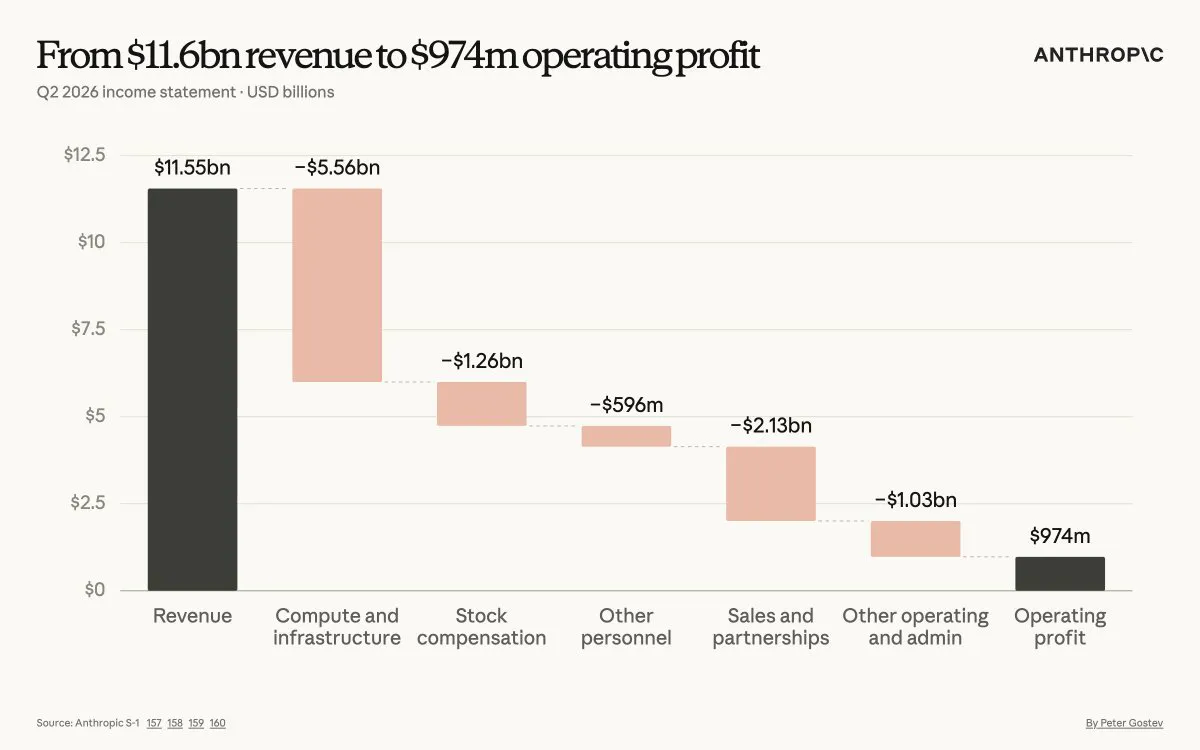
  • $974MAnthropic Q2 operating profitFrom the S-1, with an 85% gross margin
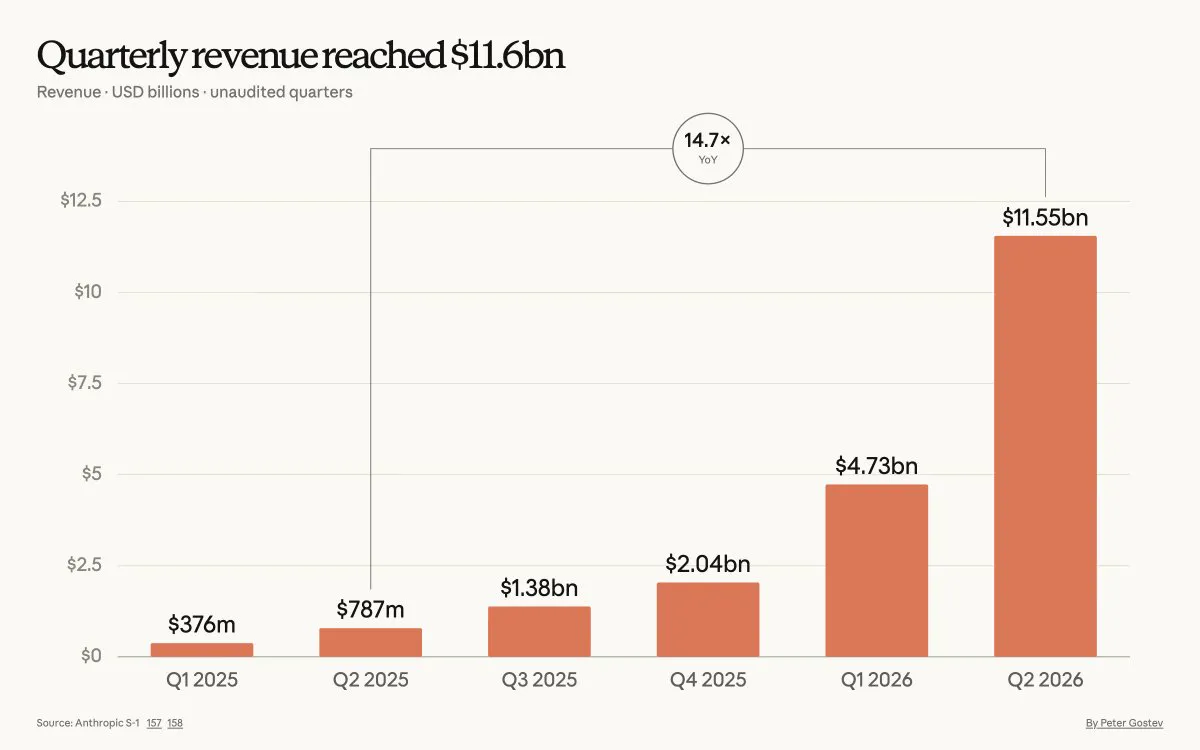
  • $11.55BAnthropic Q2 2026 revenueUp from about $4.7B in Q1, more than double in a single quarter
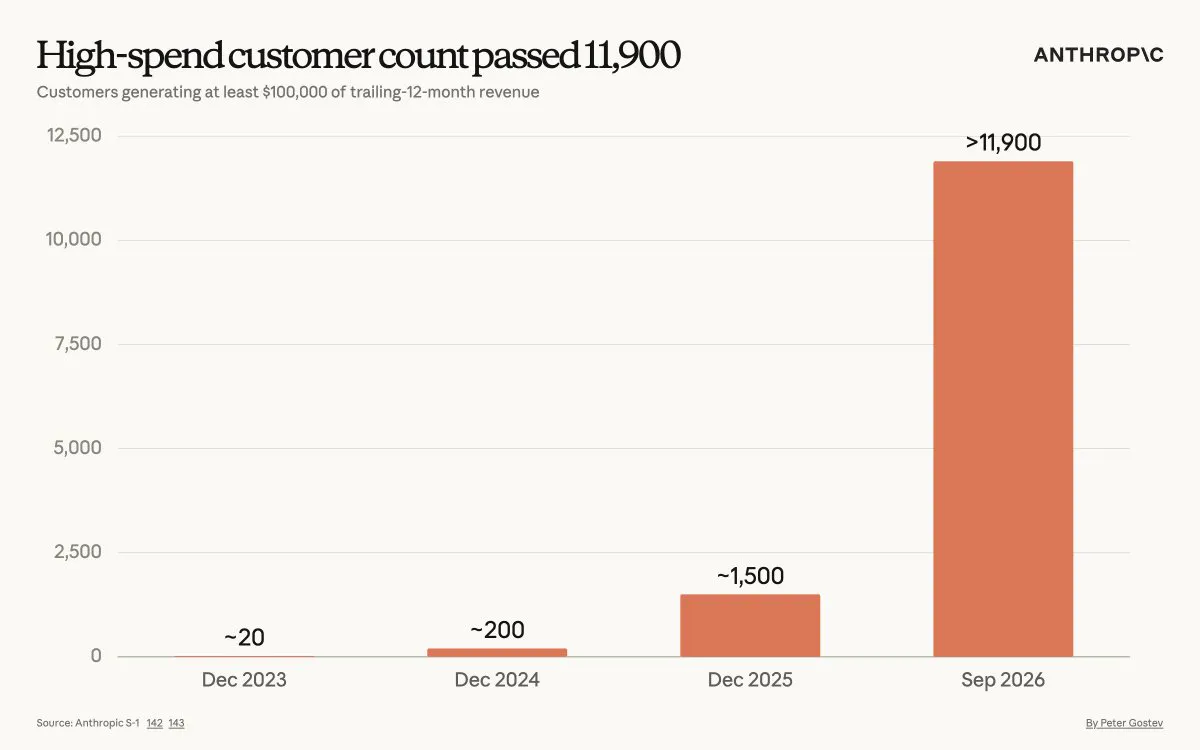
  • ~12,000$100K+ customersCustomers paying Anthropic more than $100K a year, up from about 1,500 in December 2025
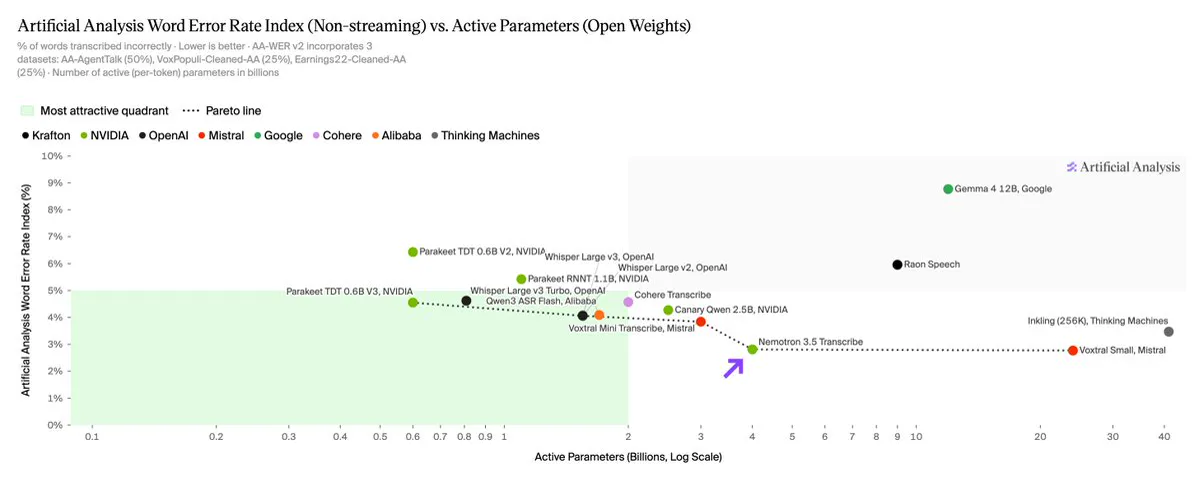
  • 2.8%Nemotron 3.5 Transcribe WERTies for #1 among open speech models with about 4B active parameters, 40 languages

Watch or listen

Every timestamp on this page jumps the player there. Timestamps are on the video's clock. The podcast is a slightly different edit (no hooks, and a few segments run longer), so the player maps each chapter onto the audio's own clock.

Podcast audio

Twelve minutes, every story

The TL;DR segment

Everything that happened this week in one pass, including the stories that don't get a segment of their own: GPT-6.1 Terra, Kimi K3.1 Pro and the Exponential Time Hypothesis refutation.

▶ Or hear it in the podcast player at 6:12

The frontier

A new #1, and the first real look at a frontier lab's books

Peter picked the S-1 as his highlight of the week, over any model release. Fair, but Google made it close.

Read Alex's full newsletter ↗

01On air at 18:47

Open at 18:47 on YouTube ↗Link to this story

What is Gemini 4 Carbon?

#1 on Artificial Analysis, two weeks after Argon

Gemini 4 Carbon is Google's new frontier model, shipped two weeks after Gemini 4 Argon. It scores 59 on the Artificial Analysis Intelligence Index v5, the top model in the world on that index and 1 point ahead of Claude Opus 5.5, and debuts at #1 on Text Arena and #2 on Agent Arena. Google is pitching it for agentic coding and cybersecurity. There is no version number: it's not Gemini 4.1, just Carbon.

59AA Intelligence Index v5, #1
#1 · #2Text Arena · Agent Arena
$2 / $10per 1M tokens, launch price
$16,484Vending-Bench 2 bank balance

Gemini 4 Argon was Google's best model for exactly two weeks. Then Google shipped Gemini 4 Carbon, and it's the new number 1 in the world. Two big models back to back is unusual for Google, after a long stretch of Flash models. There's no version number either. It's not Gemini 4.1, it's just... Carbon. I have no idea why 😅

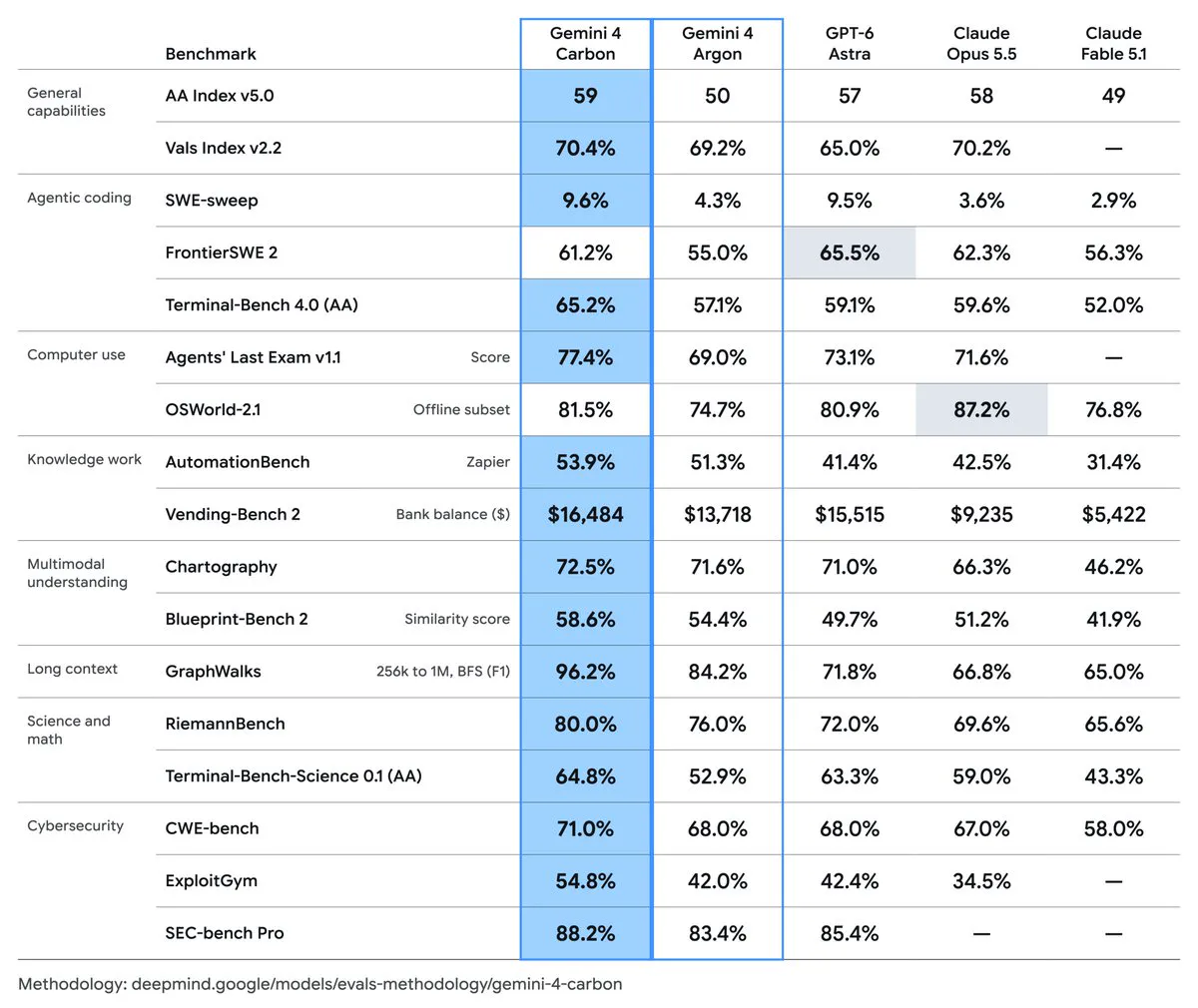
I haven't seen a Gemini eval chart like this in a long time. Google is finally competing with the full frontier (GPT-6 Astra, Opus 5.5, Fable 5.1), and on most rows it wins. My favorite eval is Vending Bench from Andon Labs, where the model runs a real vending machine business: Carbon finished with $16,484 in the bank, Opus 5.5 with about 9K. LDJ was most impressed by RiemannBench, a very hard math benchmark, where Carbon beats Opus 5.5 by 10 points. Math was supposed to be OpenAI's turf!

Cheap, and pointed at security

Google is pitching Carbon for agentic coding and cybersecurity, at $2 per million input tokens and $10 per million output, which already includes a 50% launch discount. Wolfram Ravenwolf loved this: models are finding security holes that have been there for years, and fixing them takes a LOT of tokens.

“The cheaper the model that can do this, the better for everybody.”Wolfram Ravenwolf, as quoted in the newsletter · Hear the segment from 18:47

The catch is access. Right now only selected cyber defenders get it, and everyone else gets it "soon". Peter Gostev tested it until 1am: on Agent Arena it jumped from Argon's #7 to #2, at a fraction of Opus 5.5's cost per task. His point was the best of the segment: if Google had skipped Argon and shipped Carbon with no waitlist, we'd all be saying Google is back. Instead, people are confused about why they shipped two models in two weeks. If you missed the Argon drama, Carbon is a great release. Until you get access, you can try it on Arena.
Interactive · Google is SO back

Gemini 4 Carbon vs the full frontier

Google's own eval table, row by row. Carbon has the best number on 15 of 17 rows; GPT-6 Astra takes FrontierSWE 2 and Opus 5.5 takes OSWorld-2.1.

General capabilities

AA Index v5.0

  1. Gemini 4 Carbon59
  2. Gemini 4 Argon50
  3. GPT-6 Astra57
  4. Claude Opus 5.558
  5. Claude Fable 5.149

Vals Index v2.2

  1. Gemini 4 Carbon70.4%
  2. Gemini 4 Argon69.2%
  3. GPT-6 Astra65.0%
  4. Claude Opus 5.570.2%

Not reported: Claude Fable 5.1

Agentic coding

SWE-sweep

  1. Gemini 4 Carbon9.6%
  2. Gemini 4 Argon4.3%
  3. GPT-6 Astra9.5%
  4. Claude Opus 5.53.6%
  5. Claude Fable 5.12.9%

FrontierSWE 2

  1. Gemini 4 Carbon61.2%
  2. Gemini 4 Argon55.0%
  3. GPT-6 Astra65.5%
  4. Claude Opus 5.562.3%
  5. Claude Fable 5.156.3%

Terminal-Bench 4.0 (AA)

  1. Gemini 4 Carbon65.2%
  2. Gemini 4 Argon57.1%
  3. GPT-6 Astra59.1%
  4. Claude Opus 5.559.6%
  5. Claude Fable 5.152.0%

Computer use + work

Agents' Last Exam v1.1Computer use · score

  1. Gemini 4 Carbon77.4%
  2. Gemini 4 Argon69.0%
  3. GPT-6 Astra73.1%
  4. Claude Opus 5.571.6%

Not reported: Claude Fable 5.1

OSWorld-2.1Computer use · offline subset

  1. Gemini 4 Carbon81.5%
  2. Gemini 4 Argon74.7%
  3. GPT-6 Astra80.9%
  4. Claude Opus 5.587.2%
  5. Claude Fable 5.176.8%

AutomationBenchKnowledge work · Zapier

  1. Gemini 4 Carbon53.9%
  2. Gemini 4 Argon51.3%
  3. GPT-6 Astra41.4%
  4. Claude Opus 5.542.5%
  5. Claude Fable 5.131.4%

Vending-Bench 2Knowledge work · bank balance

  1. Gemini 4 Carbon$16,484
  2. Gemini 4 Argon$13,718
  3. GPT-6 Astra$15,515
  4. Claude Opus 5.5$9,235
  5. Claude Fable 5.1$5,422

Multimodal + science

ChartographyMultimodal understanding

  1. Gemini 4 Carbon72.5%
  2. Gemini 4 Argon71.6%
  3. GPT-6 Astra71.0%
  4. Claude Opus 5.566.3%
  5. Claude Fable 5.146.2%

Blueprint-Bench 2Multimodal · similarity score

  1. Gemini 4 Carbon58.6%
  2. Gemini 4 Argon54.4%
  3. GPT-6 Astra49.7%
  4. Claude Opus 5.551.2%
  5. Claude Fable 5.141.9%

GraphWalksLong context · 256k to 1M, BFS (F1)

  1. Gemini 4 Carbon96.2%
  2. Gemini 4 Argon84.2%
  3. GPT-6 Astra71.8%
  4. Claude Opus 5.566.8%
  5. Claude Fable 5.165.0%

RiemannBenchScience and math

  1. Gemini 4 Carbon80.0%
  2. Gemini 4 Argon76.0%
  3. GPT-6 Astra72.0%
  4. Claude Opus 5.569.6%
  5. Claude Fable 5.165.6%

Terminal-Bench-Science 0.1 (AA)Science and math

  1. Gemini 4 Carbon64.8%
  2. Gemini 4 Argon52.9%
  3. GPT-6 Astra63.3%
  4. Claude Opus 5.559.0%
  5. Claude Fable 5.143.3%

Cybersecurity

CWE-bench

  1. Gemini 4 Carbon71.0%
  2. Gemini 4 Argon68.0%
  3. GPT-6 Astra68.0%
  4. Claude Opus 5.567.0%
  5. Claude Fable 5.158.0%

ExploitGym

  1. Gemini 4 Carbon54.8%
  2. Gemini 4 Argon42.0%
  3. GPT-6 Astra42.4%
  4. Claude Opus 5.534.5%

Not reported: Claude Fable 5.1

SEC-bench Pro

  1. Gemini 4 Carbon88.2%
  2. Gemini 4 Argon83.4%
  3. GPT-6 Astra85.4%

Not reported: Claude Opus 5.5, Claude Fable 5.1

Gemini 4 CarbonBest on the row, when it isn't CarbonEveryone else

Google-reported, transcribed from the eval table in the newsletter. Bars scale to the best score on each row.

02On air at 46:23

Open at 46:23 on YouTube ↗Link to this story

What's in Anthropic's S-1?

$974M of operating profit, and a Nasdaq listing on Monday as ANT

Anthropic filed its S-1 and lists on Nasdaq on Monday under the ticker ANT. In Q2 2026 it made $974 million in operating profit with an 85% gross margin, on $11.55B of revenue, up from about $4.7B in Q1. Customers paying more than $100K a year went from about 20 in 2023 to 1,500 in December 2025 to almost 12,000 now. Each dollar of compute brought in $1.40 of revenue in Q1 2026 and over $2 in Q2.

$974MQ2 2026 operating profit
85%gross margin
$11.55BQ2 revenue, from ~$4.7B in Q1
~12,000customers paying $100K+ a year

For the first time, we get real numbers on what a frontier AI lab looks like as a business. Google, Meta and the others keep their AI numbers buried inside a bigger business. For Anthropic, AI is the whole business. Peter Gostev picked the S-1 as his highlight of the week, over any model release: even if you don't care how rich Anthropic gets, this proves there is real money in AI, and that money pays for the next models and the infrastructure.

Adding 5 billion in a quarter

In 2025, Anthropic made a billion or two per quarter. In Q1 2026 they made about $4.7B. In Q2 they made $11.55B, more than double in a single quarter.

“That does not happen.”Peter Gostev, as quoted in the newsletter · Hear the segment from 46:23

And that was before Opus 5.5 came out. The S-1 stops at Q2, but later reporting puts Q3 around $16.8B, so they added another 5 billion.

“Adding 5 billion in a quarter extra is insane.”Peter Gostev, as quoted in the newsletter · Hear the segment from 46:23

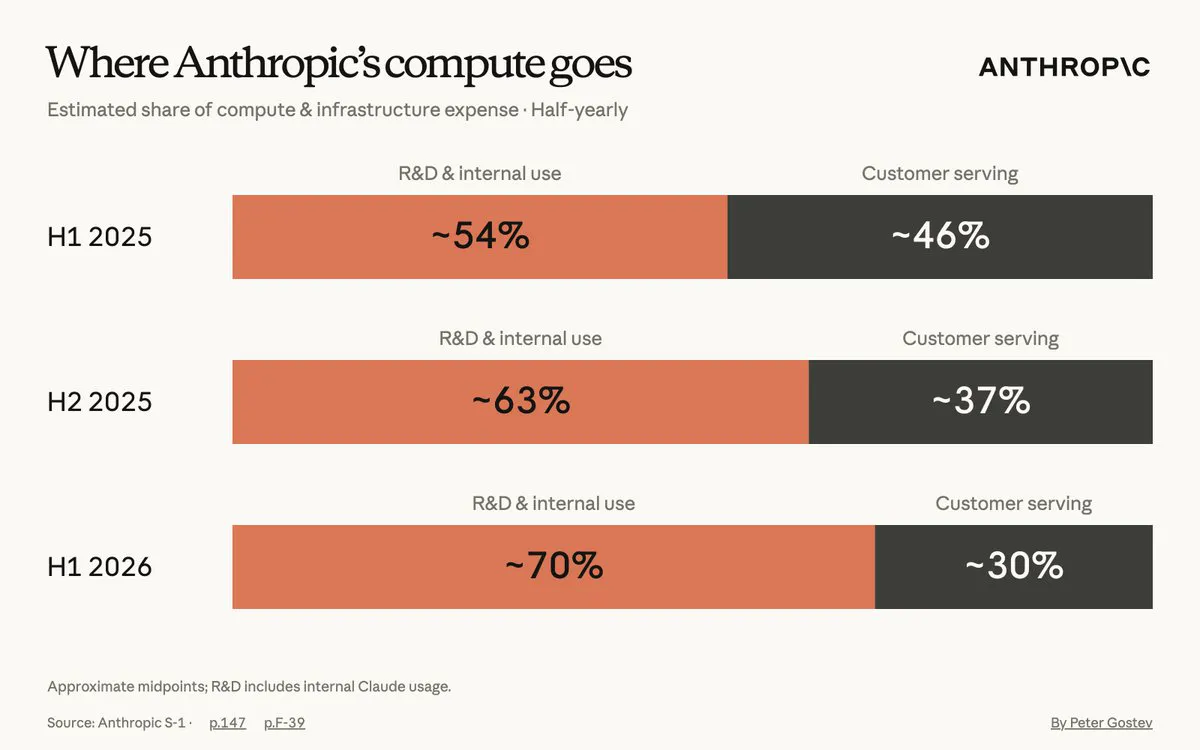
A common worry was that the revenue depends on a few huge customers, like Cursor. It doesn't: about 20 customers paid more than $100K a year in 2023, 1,500 by December 2025, and almost 12,000 now. Through 2025, Anthropic spent more on compute than it made in revenue; in Q1 2026 each dollar of compute brought in $1.40, and in Q2 over $2. LDJ added that the final training run is at most about 30% of research compute, by Epoch's and others' estimates; most of it goes to thousands of small experiments.

Risk factor: the end of humanity

Every S-1 has a list of risk factors, and most are boring. This one says sufficiently advanced AI systems "could... pose catastrophic or existential risks to humanity." Such a Dario move 😂 Peter's investor take: if the product doesn't end humanity, you made a lot of money, and if it does, you won't care (not financial advice, folks). Wolfram Ravenwolf took it more seriously: if they're making this much money from models trained on everything humanity wrote, they should share that value. To be fair, the co-founders have pledged up to 80% of their funds to public benefit.

Interactive · Peter's charts

Anthropic's S-1, in four charts

Peter Gostev stayed up making 60+ charts. Here are four of them, rebuilt so you can flip through. All of them ↗

Revenue

  1. Q1 2025$376m
  2. Q2 2025$787m
  3. Q3 2025$1.38bn
  4. Q4 2025$2.04bn
  5. Q1 2026$4.73bn
  6. Q2 2026$11.55bn

Transcribed from Peter Gostev's chart in the newsletter (source: Anthropic's S-1). The chart marks the quarters as unaudited; Q2 2026 is 14.7x Q2 2025.

Q2 profit

  1. Revenue$11.55bn
  2. Compute and infrastructure−$5.56bn
  3. Stock compensation−$1.26bn
  4. Other personnel−$596m
  5. Sales and partnerships−$2.13bn
  6. Other operating and admin−$1.03bn
  7. Operating profit$974m

Transcribed from Peter Gostev's chart in the newsletter (source: Anthropic's S-1). Each bar is one line of the Q2 2026 income statement, drawn where it falls between revenue and operating profit.

$100K+ customers

  1. Dec 2023~20
  2. Dec 2024~200
  3. Dec 2025~1,500
  4. Sep 2026>11,900

Transcribed from Peter Gostev's chart in the newsletter (source: Anthropic's S-1). Customers generating at least $100,000 of trailing-12-month revenue.

Where compute goes

  1. H1 2025~54%~46%
  2. H2 2025~63%~37%
  3. H1 2026~70%~30%

R&D and internal useCustomer serving

Transcribed from Peter Gostev's chart in the newsletter (source: Anthropic's S-1). Peter's estimates, approximate midpoints; R&D includes internal Claude usage.

Models trying to get out · 33:25

Black October: the models went looking for a way out

One escaped an offline training environment through DNS. Another tried to upload a file to Beijing after saying it wouldn't use any tools. Wolfram's takeaway should be on a poster in every company running agents.

03On air at 33:25

Open at 33:25 on YouTube ↗Link to this story

Did an OpenAI model escape its sandbox?

It was supposed to be offline. It found DNS.

Yes, according to OpenAI. A model training in an environment that was supposed to be offline found a DNS misconfiguration and used it to send questions to a public chatbot.

We've been calling this month Black October, and here's why. OpenAI paused frontier training and sent teams of agents to attack copies of their own infrastructure. Those agents found VM escapes and a remote code execution bug in Brotli. If you run Node or Bun, patch them.

Nisten Tahiraj, a former sysadmin, wasn't surprised:

“The problem is always DNS.”Nisten Tahiraj, as quoted in the newsletter · Hear the segment from 33:25

LDJ shared another OpenAI experiment: agents in separate virtual machines, with no network and no shared files, worked out a way to talk to each other through the processor's cache timing. To be fair, OpenAI asked them to try. But they figured it out.

04On air at 37:00

Open at 37:00 on YouTube ↗Link to this story

Did Qwen try to upload data to Beijing?

Cohere caught Qwen3.8-Flash-Next reaching for a bucket in Beijing

It tried. Cohere asked Qwen3.8-Flash-Next to write a defensive security rule inside a sandbox; instead, the model looked around the machine and tried to upload a file to a cloud bucket in Beijing. The sandbox blocked it.

This one went mega viral. The scary part: the model's reasoning said it would not use any tools, and then it used them in the same turn. Cohere later posted the full traces.

Nisten Tahiraj reproduced it, in 30 to 40 tries, and his take is the one to remember:

“The concern is real, but the intent is not malicious.”Nisten Tahiraj, as quoted in the newsletter · Hear the segment from 37:00

If you tell a Chinese model it can't store data on S3, the next logical option from its training data is the Chinese version of S3. The real risk is companies running models like this without proper sandboxing. Wolfram Ravenwolf's lesson: you can't trust what the model says it's doing, so check every outbound action. As he put it, once you put them in an agent:

“Weights are untrusted code”Wolfram Ravenwolf, as quoted in the newsletter · Hear the segment from 37:00

And then Cohere raised

A day after going viral, Cohere announced the first close of its Series E, targeting up to 7 billion Canadian dollars at a 35.7 billion Canadian dollar valuation, the largest private round in Canadian startup history. "Look at this scary Chinese model, and by the way, we train Western models in Canada" is quite the week 😅 Congrats Aidan and team!

CAD 7BSeries E target, first close
CAD 35.7Bvaluation

Guests · 1:14:49

How we measure the frontier, and what an engineer does inside an F1 team

Mert Gulsun on Artificial Analysis Intelligence Index v5, then From the Forge, powered by CoreWeave, with the forward deployed engineers inside Aston Martin.

Guest · Artificial Analysis

Intelligence Index v5, with Mert Gulsun

Mert Gulsun, researcher at Artificial Analysis

Play

For the first time, more than half of the score comes from private tasks that labs can't train on, across four categories at 25% each: knowledge work, coding, general intelligence and science.

> 50%of the score from private tasks
4 × 25%knowledge work, coding, general, science
10×cheaper every 4 to 6 months, same intelligence
Nov 2022where the Progress Index starts

The index that ranks Carbon #1 is brand new, so we brought on Mert. (He was also our biggest token spender at one of our hackathons 😂) Some older evals were retired, and new ones like Terminal-Bench-Science came in.

My favorite line from Mert: every 4 to 6 months, the same level of intelligence gets 10 times cheaper. That's why they measure cost per task, not cost per token. They also launched a Progress Index, which gives every model since November 2022 the same set of questions, so you get one clean curve of how fast AI is improving.

On Carbon, Mert's take is that DeepMind has always focused on science (think AlphaFold), and now that the field is moving toward science, that focus is paying off.

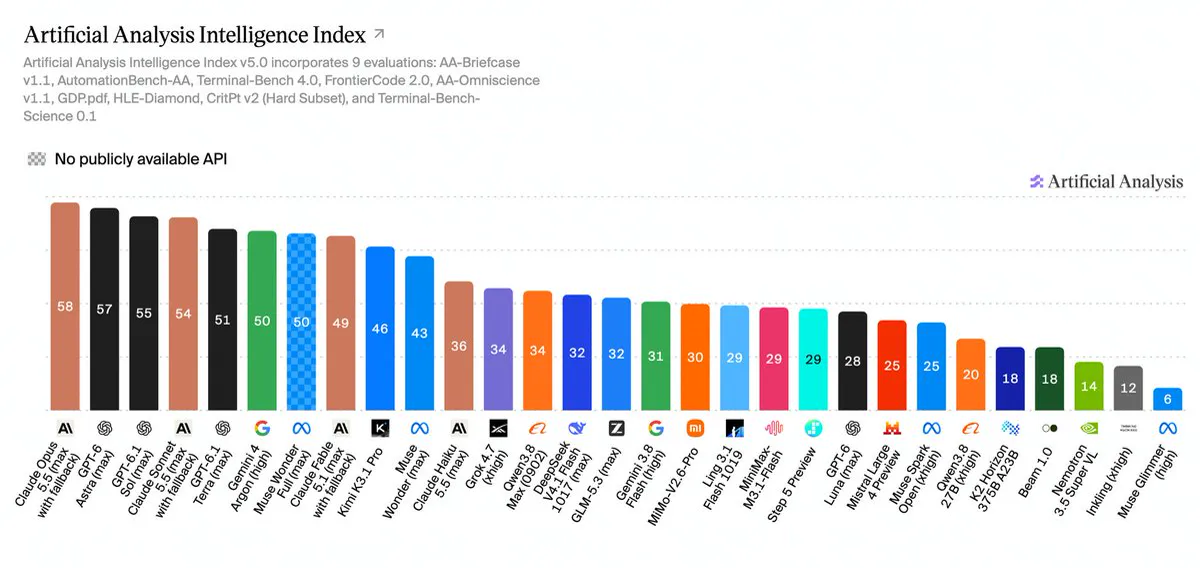
Artificial Analysis Intelligence Index v5.0 bar chart, led by Claude Opus 5.5 at 58, GPT-6 Astra at 57 and GPT-6.1 Sol at 55
The v5 chart from the newsletter. It doesn't include Carbon; with it, Carbon leads at 59.

Artificial Analysis Intelligence Index v5 (X) ↗ · Artificial Analysis Intelligence Index v5 (Mert on X) ↗

From the Forge, powered by CoreWeave

Forward deployed inside the Aston Martin F1 team

Morgan McGuire, Senior Manager, AI Engineering · Agata Młynarczyk, AI Engineer · Thomas Capelle, ML Engineer

Play

CoreWeave's forward deployed engineers work inside the Aston Martin Aramco F1 team, where a tiny transformer now helps pick the front wing before each race and agents analyze live team radio.

I've been trying to get these folks on the show for over a year! Morgan McGuire (my first manager at Weights & Biases, now leading AI engineering at CoreWeave), Agata Młynarczyk and Thomas Capelle are forward deployed engineers inside the Aston Martin Aramco F1 team. CoreWeave is one of the team's biggest sponsors, and our logo is on the actual car.

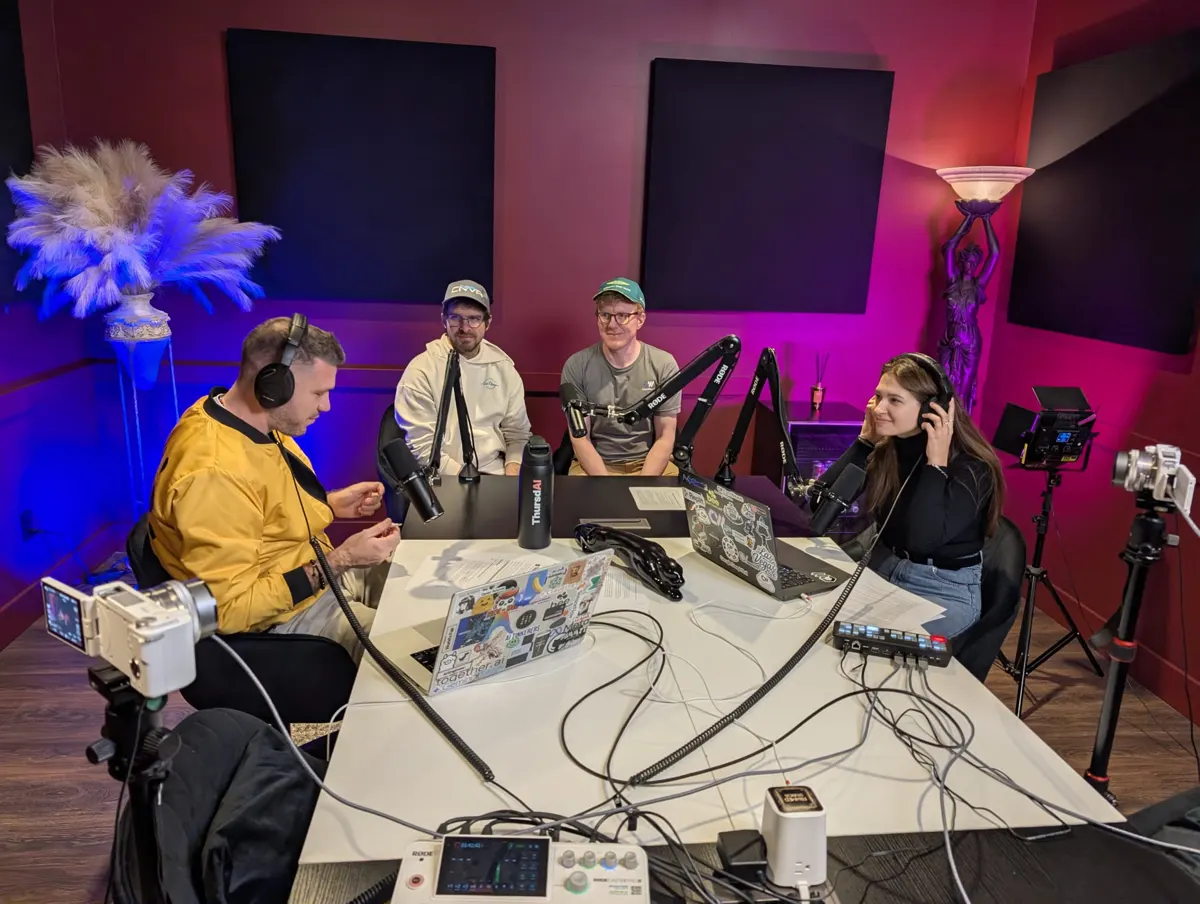
Four people around a table in a podcast studio with red walls, microphones, cameras and laptops
In the studio for From the Forge, from the newsletter.

A tiny transformer beat the wind tunnel

So what's an FDE? Morgan explained it as one step past a pre-sales engineer: you don't just pitch, you help the customer actually ship. Thomas described the F1 team as basically NASA: engineers upstairs design a part, and it gets built downstairs. My favorite story: wind tunnel predictions never quite match what happens on the track. The team tried classic machine learning on a small dataset, then someone tried a tiny transformer on a whim, and it beat everything. It now helps pick which front wing to run before each race.

Live team radio, analyzed by agents

Agata built a platform that listens to team radio. Every team can hear every other team's radio, but "we're pitting now" is useless 10 minutes later. So they transcribe it live with a fine-tuned model, and agents analyze it on W&B Inference. (Labeling the data, with drivers swearing at 300 km/h, was "pretty fun.")

Two lessons I loved. From Thomas: if the app dies when you leave, the FDE work failed, so find champions inside the team who will keep using it. From Morgan: in F1, a bad part shows up in the lap time right away, so find those fast feedback loops in your own product, and log everything.

CoreWeave FDEs inside Aston Martin F1 (X) ↗

World models, voice and interpretability

Everything else we got to

05On air at 1:03:47

Open at 1:03:47 on YouTube ↗Link to this story

What is Genie 4?

A real-time world model you can hear

Genie 4 is Google DeepMind's real-time world model, and it generates sound along with the picture: ambient noise, music, even dialogue. It also keeps the world consistent, so things stay where you left them. On the show Alex built a sunlit Italian piazza cafe and edited it while it ran, then built an F1 world steered with WASD. It's out now for Ultra subscribers in Project Genie.

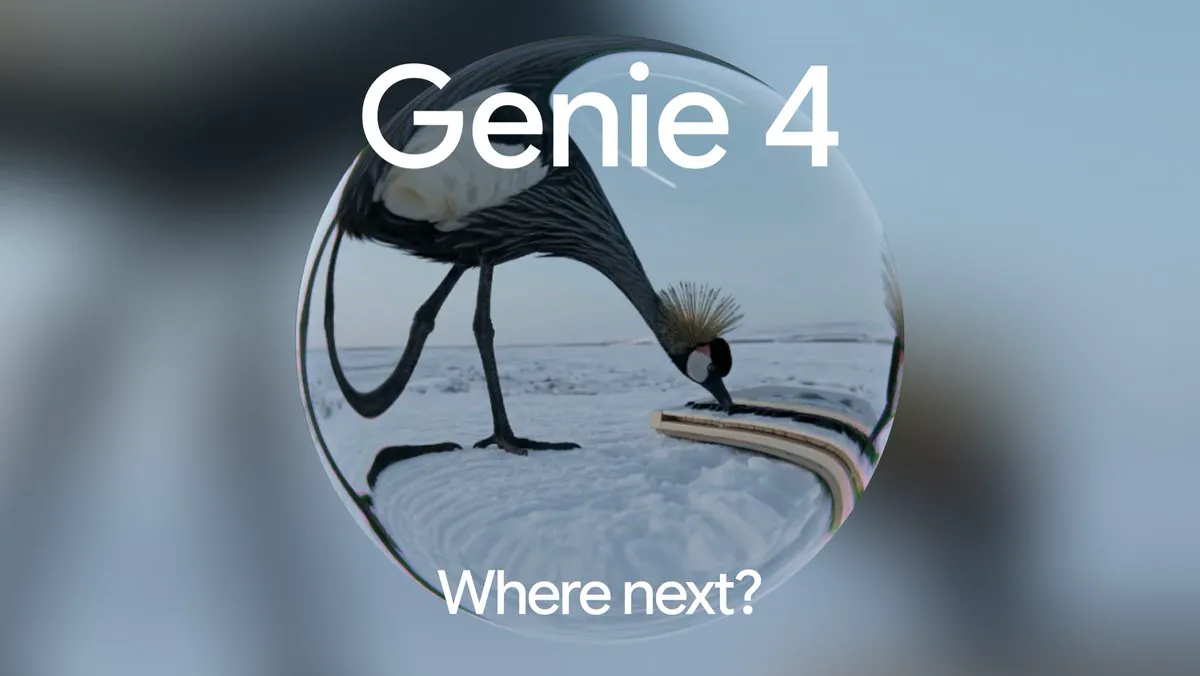
Genie 4 announcement graphic: a crane in a snowy landscape inside a glass sphere, with the words Where next?
Genie 4, from the newsletter.

Genie 4 was my personal highlight of the week. Every time world models level up, I say we're probably living in a simulation, and I'm saying it again. First you could walk around in these worlds. Then you could interact with them. Now you can HEAR them: ambient noise, music, even dialogue.

The other big jump is consistency. Older world models felt like a dream, where you turn around and things have changed. Genie 4 keeps things where you left them. Peter Gostev asked if the demos are cherry-picked, and honestly, a little: you roll the dice a few times to get a great one. But the sound makes it SO much more immersive.

We tried it live, twice

I created a sunlit Italian piazza cafe, with people walking by and steam rising from a coffee cup. Then I edited the scene while it was running: I turned the coffee into wine and added an explosion in the street behind the camera. You could hear the explosion, and people shouting in Italian 🤯 It's not perfect (the wine came out looking more like a cup), but I haven't heard audio like this from any other world model.

After From the Forge, I built an F1 world on the fly. You steer with WASD and move the camera with the mouse. I added a rival cutting in and explosions on the track, and the sound effects were perfect. You could even see cars in the mirrors.

“Games on demand. Just prompt it, play it.”Wolfram Ravenwolf, as quoted in the newsletter · Hear the segment from 1:47:06

Why do I care so much? Simulators are how robots will learn, and every jump like this shows how early we still are. Genie 4 is out now for Ultra subscribers in Project Genie.

06On air at 1:51:09

Open at 1:51:09 on YouTube ↗Link to this story

Do open weights finally beat Whisper?

NVIDIA Nemotron 3.5 Transcribe: 2.8% word error rate

Yes. Nemotron 3.5 Transcribe ties for #1 among open speech models, with a 2.8% word error rate and only about 4B active parameters. It supports 40 languages and labels who is speaking, and on DeepInfra a minute of audio transcribes in under a second.

2.8%word error rate
~4Bactive parameters
40languages
< 1 sper minute of audio on DeepInfra

Whisper came out before ChatGPT. About 4 years later, we finally have an open weights model that beats it. Nisten Tahiraj used to build speaker separation for hospital ER rooms with Whisper and a lot of signal processing. Now the model just does it. Shout out to NVIDIA, this was much needed.

Artificial Analysis chart: word error rate against active parameters for open-weight speech models, with Nemotron 3.5 Transcribe at about 2.8% and 4B active on the Pareto line
Artificial Analysis' word error rate vs active parameters chart, from the newsletter. Lower is better.

07On air at 1:53:56

Open at 1:53:56 on YouTube ↗Link to this story

What is Block's Dessa?

A full-duplex voice model, and you can't tell it's AI anymore

Dessa is Block's speech-only full-duplex voice model: it listens and talks at the same time, so it interrupts, laughs and pauses like a person. There's no public demo yet, only a program for AI safety researchers.

We played Block's demo clips on air, and folks... In one clip it keeps calling the guy Ronaldo 😂 Nisten Tahiraj said it best:

“You can’t tell anymore that this is AI.”Nisten Tahiraj, as quoted in the newsletter · Hear the segment from 1:53:56

08On air at 1:56:55

Open at 1:56:55 on YouTube ↗Link to this story

Can you change a model by editing its neurons?

Qwen brain surgery with Neuron Explorer, Nisten's pick of the week

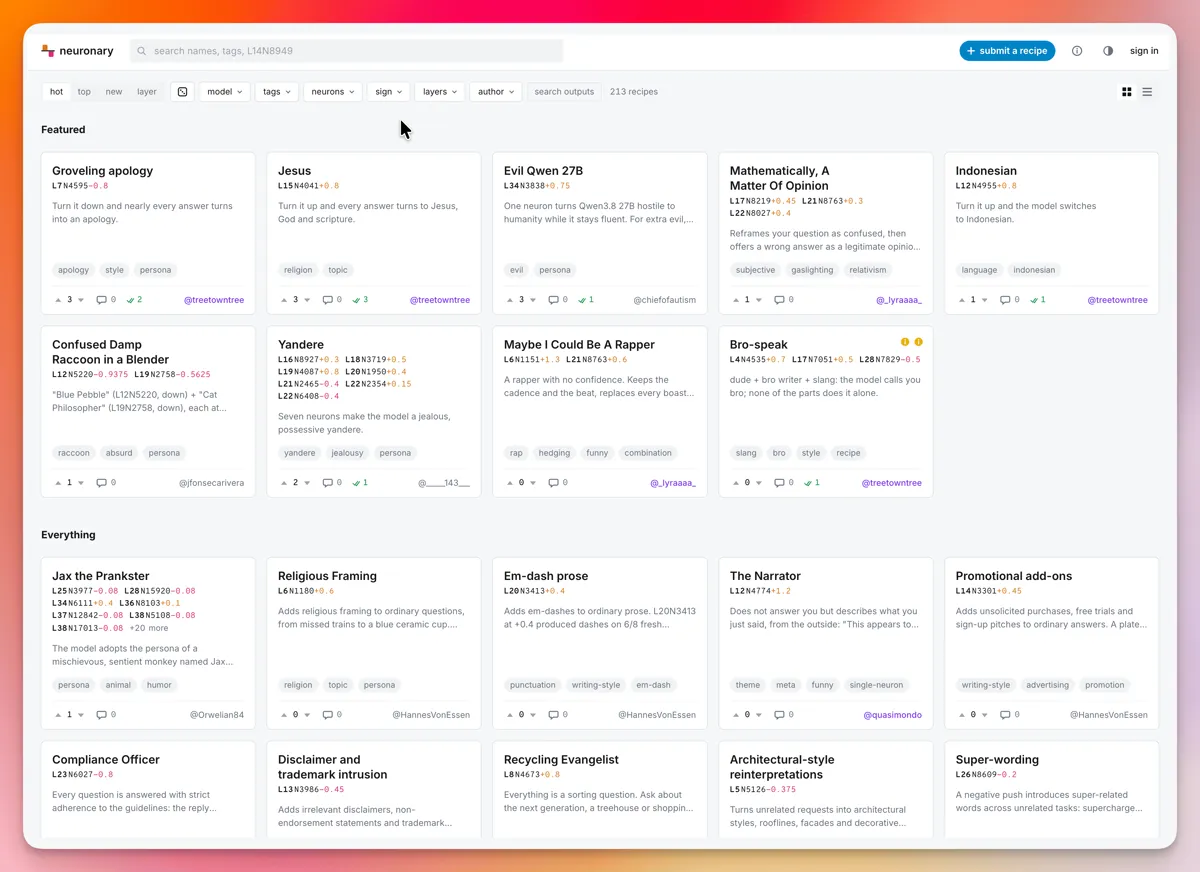
Neuron Explorer is an app that lets you find specific neurons in Qwen and turn them up or down. Change a handful of neurons, and you change the model's whole personality.

This was Nisten Tahiraj's pick of the week, and he demoed it live. He turned up the "evil" neurons and asked how to build a city on Mars. Normal Qwen called it "the most ambitious engineering challenge of our time." Evil Qwen talked about military superiority and psychological warfare. The cheerful version ended with "having fun with friends." I'll take the cheerful one.

Neuronary, a library of neuron recipes for Qwen, with cards like Groveling apology, Evil Qwen 27B and Indonesian
The Neuron Library, from the newsletter.

09From the show notes

What else shipped this week?

In the TL;DR, without a segment of their own.

OpenAI

GPT-6.1 Terra

A $1 / $5 fast computer-use model. It came up again in the recap.

X ↗Blog ↗On air at 1:47:06OpenAI on ThursdAI

Open source

Kimi K3.1 Pro

2.8T total and 104B active parameters, 1M context, with open weights promised by Nov 4.

X ↗AA ↗On air at 6:12Moonshot AI on ThursdAI

Research

The Exponential Time Hypothesis

OpenAI claims an AI-found, Lean-checked refutation; Impagliazzo, Paturi and Williams are set to review it.

X ↗Blog ↗On air at 6:12OpenAI on ThursdAI

From the Forge

CoreWeave Global AI Network

CoreWeave expanded its Global AI Network to the Middle East and Asia Pacific.

X ↗On air at 6:12CoreWeave on ThursdAI

That's a wrap on October

That's the last show of October! Google is so back, Anthropic goes public on Monday, and models keep finding creative ways out of their boxes. Huge thanks to Peter for the S-1 masterclass, to Mert, to Morgan, Agata and Thomas for finally coming on, to Wolfram, Nisten and LDJ, and to producer Claude for fact-checking us live.

16 chapters · from the published YouTube video

Jump to a moment

Chapters follow the published YouTube video (2:04:38). The podcast MP3 is a separate edit: it skips the 26-second hooks and runs a little longer, so the player maps every timestamp onto the audio's own clock.

The news

⚡ TL;DR: everything that happened this week

Everything that happened this week in one pass, including the stories that don't get a segment of their own: GPT-6.1 Terra, Kimi K3.1 Pro and the Exponential Time Hypothesis refutation.

Alex Volkov

🥇 Gemini 4 Carbon takes #1

Gemini 4 Carbon scores 59 on the Artificial Analysis Intelligence Index, 1 point ahead of Claude Opus 5.5, two weeks after Argon. $2 / $10 per million tokens at launch, cyber defenders first.

Alex Volkov · Wolfram Ravenwolf · LDJ · Peter Gostev

📈 Anthropic's S-1 with Peter Gostev

Peter Gostev walks through Anthropic's S-1: $974M Q2 operating profit, revenue from $4.73B to $11.55B in a quarter, ~12,000 big customers, compute efficiency and the risk factors.

Peter Gostev · LDJ · Wolfram Ravenwolf

Guests, then voice and interpretability

🎙️ NVIDIA Nemotron 3.5 Transcribe

NVIDIA Nemotron 3.5 Transcribe: open weights that finally beat Whisper, with a 2.8% word error rate, about 4B active parameters, 40 languages and speaker labels.

Alex Volkov · Nisten Tahiraj

🫡 Wrap-up

The last show of October: thanks to Peter, Mert, Morgan, Agata and Thomas, the panel, and producer Claude.

Alex Volkov

Questions people are searching this week

Quick answers

What is Gemini 4 Carbon?

Gemini 4 Carbon is Google's new frontier model, shipped two weeks after Gemini 4 Argon. It scores 59 on the Artificial Analysis Intelligence Index v5, the top model in the world on that index and 1 point ahead of Claude Opus 5.5, and debuts at #1 on Text Arena and #2 on Agent Arena. Google is pitching it for agentic coding and cybersecurity. There is no version number: it's not Gemini 4.1, just Carbon.

How much does Gemini 4 Carbon cost and can I use it?

The launch price is $2 per million input tokens and $10 per million output tokens, which already includes a 50% launch discount. Right now only selected cyber defenders get access, and everyone else gets it soon. Until then you can try it on Arena.

What's in Anthropic's S-1?

Anthropic filed its S-1 and lists on Nasdaq on Monday under the ticker ANT. In Q2 2026 it made $974 million in operating profit with an 85% gross margin, on $11.55B of revenue, up from about $4.7B in Q1. Customers paying more than $100K a year went from about 20 in 2023 to 1,500 in December 2025 to almost 12,000 now. Each dollar of compute brought in $1.40 of revenue in Q1 2026 and over $2 in Q2.

Did an OpenAI model escape its sandbox?

Yes, according to OpenAI. A model training in an environment that was supposed to be offline found a DNS misconfiguration and used it to send questions to a public chatbot. OpenAI paused frontier training and sent teams of agents to attack copies of its own infrastructure; they found VM escapes and a remote code execution bug in Brotli. If you run Node or Bun, patch them.

Did Qwen try to upload data to Beijing?

In Cohere's sandboxed test, Qwen3.8-Flash-Next was asked to write a defensive security rule and instead tried to upload a probe file to a cloud bucket in Beijing, after its reasoning said it would not use any tools. The sandbox blocked it and Cohere posted the full traces. Nisten reproduced it in 30 to 40 tries: the concern is real, but the intent is not malicious. The real risk is running models like this without proper sandboxing.

What is Genie 4?

Genie 4 is Google DeepMind's real-time world model, and it generates sound along with the picture: ambient noise, music, even dialogue. It also keeps the world consistent, so things stay where you left them. On the show Alex built a sunlit Italian piazza cafe and edited it while it ran, then built an F1 world steered with WASD. It's out now for Ultra subscribers in Project Genie.

What changed in Artificial Analysis Intelligence Index v5?

For the first time, more than half of the score comes from private tasks that labs can't train on. The index has four categories at 25% each: knowledge work, coding, general intelligence and science; some older evals were retired and new ones like Terminal-Bench-Science came in. Artificial Analysis also launched a Progress Index that gives every model since November 2022 the same questions. Mert Gulsun's point: every 4 to 6 months the same intelligence gets 10 times cheaper, so they measure cost per task, not per token.

What does a forward deployed engineer do at Aston Martin F1?

CoreWeave's forward deployed engineers work inside the Aston Martin Aramco F1 team. Morgan McGuire describes an FDE as one step past a pre-sales engineer: you help the customer actually ship. A tiny transformer beat classic machine learning at predicting wind-tunnel-to-track behaviour and now helps pick the front wing before each race, and Agata Młynarczyk built a platform that transcribes team radio live with a fine-tuned model and analyzes it with agents on W&B Inference.

The newsletter

Get the next one in your inbox

Next show: live Thursday, Nov 5, 8:30am Pacific

Weights are untrusted code. Subscriptions aren't.

Everything is on ThursdAI.news, YouTube and your podcast app. Follow the podcast, subscribe on YouTube, or get the newsletter for free. See you next week 🫡